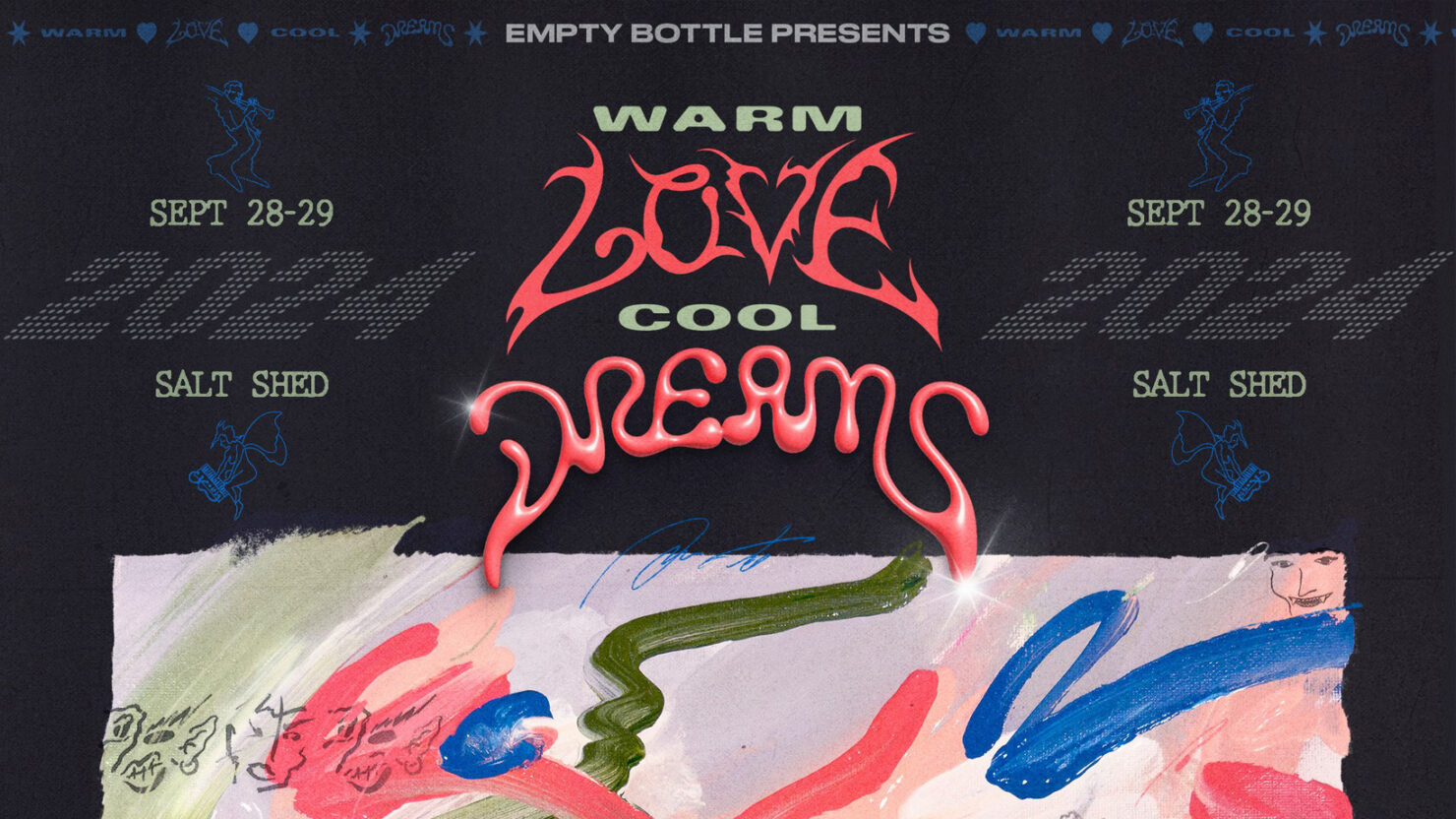
Two years after its parent company shut down Pitchfork Music Festival following 19 years in Union Park, the second edition of Warm Love Cool Dreams took over the entire Salt Shed compound on May 23 and 24. Courtney Barnett and The Jesus and Mary Chain headlined, with Chicago’s Tortoise and Whitney on the bill.
The detail that explains the festival is the promoter: this is an Empty Bottle Presents production, the same programmer behind West Fest in July. One Ukrainian Village rock club is effectively curating two of the more interesting music events in the city, which is a concentration of taste that no magazine-owned festival ever had here.
What Replaced Pitchfork Is Smaller and Local
The comparison was not the organisers’ idea. What filled the Goose Island compound was a set of artisans and attractions that called Pitchfork’s former hallmarks to mind, and the best description anyone landed on all weekend was that it resembled the coolest farmers’ market in the city with serious live music attached.
That is accurate and it is the point. Indoors, the outdoor Fairgrounds, the Three Top Lounge and the Elston Electric arcade were all in use, alongside the Oddball Market, the Arts of Life Studio Sale — a studio supporting artists with disabilities — tattoo artists, local vendors and river boat rides around Goose Island.
Pitchfork’s Chicago residency was always contingent on a decision made in New York, and when that decision changed the festival evaporated. A festival built into a venue it does not have to vacate is much harder to take away, and it grows by opening rooms it already owns rather than by leasing more park. In a summer when three Chicago festivals expanded and all three strained, that is not a small structural advantage.
Tortoise and Whitney, Two Eras on One Bill
The local booking was the most interesting thing on the card. Tortoise are foundational Chicago post-rock, a band whose nineties records argued that this city’s guitar music could be rigorous and instrumental and still fill rooms. Whitney arrived two decades later out of the same neighborhoods with a softer, more melodic version of the same independence.
Putting them on one bill is a claim about continuity — that Chicago indie is a lineage rather than a series of unconnected scenes. Pitchfork used to make that claim from outside, in prose. This festival makes it by booking.
The venue is the other half. The Salt Shed is the old Morton Salt plant on Elston, converted into an indoor hall, an outdoor yard, a bar and an arcade on one site, and it has become the most useful piece of music real estate in Chicago precisely because it is several venues at once. Tickets and the full running order went out through Do312.
Chicago lost a festival it did not control and built one it does. That trade looks better every year.
Cover image: Via thirdcoastreview.com