The Midway Plaisance holds cold early in the morning and gives it back late, and by noon on Saturday September 26th the covered Wagner Stage had an audience that had arrived with folding chairs expecting to stay all day. The Hyde Park Jazz Festival ran its twentieth edition that weekend, Saturday noon until ten and Sunday one until seven, and it cost nothing.
Jazz in this city has an institutional problem: the free city festival downtown programmes for scale, and the clubs programme for a hundred people. This one programmes for musicians.
Free admission, two days, stages indoors and out across one neighbourhood. The ten-dollar figures in circulation are for the festival's paid satellite events rather than the festival itself.
What Was Programmed
The booking logic is to put working Chicago improvisers in front of an audience that will actually listen, in rooms where listening is possible. Thaddeus Tukes appeared on a piece billed as "Caravan #2" with Kalwonder, which is exactly the sort of pairing that would not survive a downtown main stage and is the reason to come here.
The Wagner Stage carried the outdoor programme under a banner, and the sound on the Plaisance is better than an open field has any right to be, because the Midway is a sunken canal bed — Olmsted dug it for a waterway that never came, and the depression holds sound in.
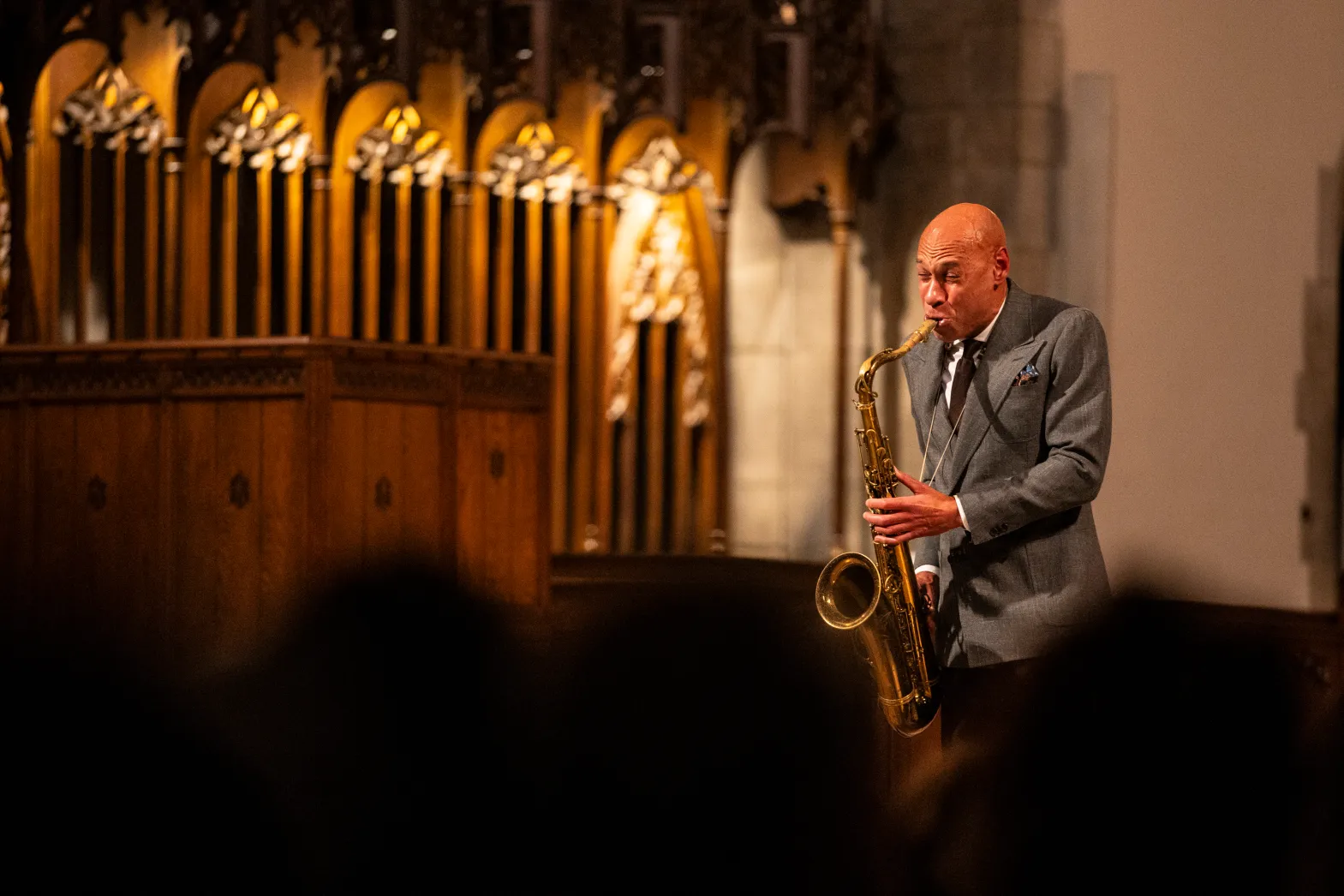
The indoor half of this festival is the half that justifies it. Sets run in university rooms, a hotel space and a church across the neighbourhood, at a scale of a hundred or two hundred people, with no amplification in some of them — which means a listener can hear a drummer's stick on a rim. A free festival programming unamplified rooms is making a claim about what it thinks jazz is.
Twenty Years On Olmsted's Ditch
The Midway Plaisance was laid out for the 1893 World's Columbian Exposition as the fairground's entertainment strip — the word midway comes from it — and it has been a mile of grass between two park systems ever since, mostly used for nothing. A free jazz festival using the strongest piece of unbuilt nineteenth-century landscape in Chicago is the best repurposing anybody has managed in a century.
The University of Chicago supplies some of the audience and most of the indoor rooms. The neighbourhood supplies the rest.
Chairs were still out on the Plaisance at dusk on the Sunday with the stage already struck. Twenty years, no ticket, and the best listening in Chicago.
Cover image: East Hyde Park Boulevard / Wikimedia Commons