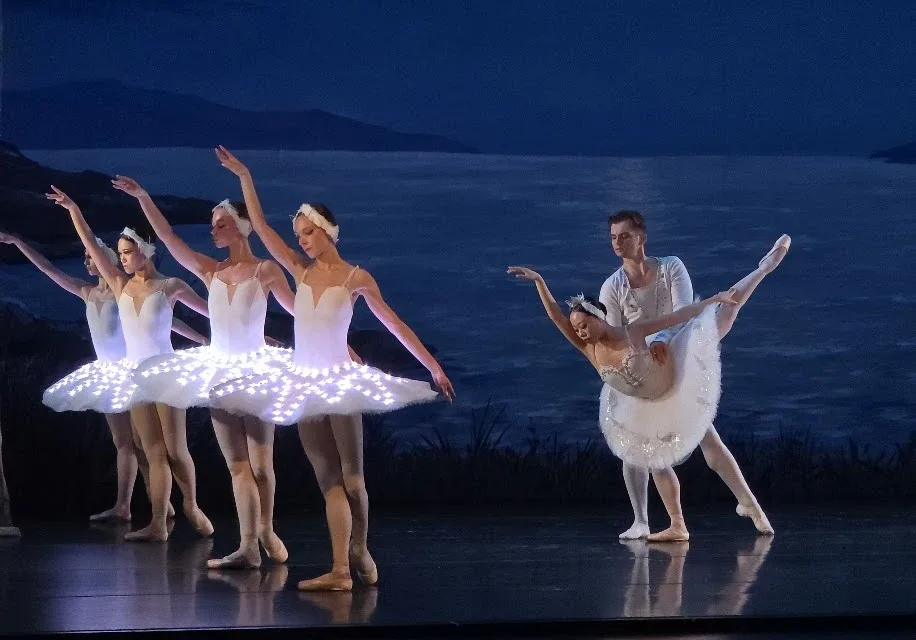
The difficulty with a corps de ballet in white is that white does not hold an edge. Two dozen women in identical bodices under an identical wash, seen from row K, resolve into one pale mass with arms coming off it, and every production of this ballet for a hundred years has accepted that as the price of the image. Grand Kyiv Ballet’s Swan Lake: Symphony of Lights, at the Harris Theater on Wednesday October 14th for one performance only, declines to pay it. The company has put the lighting instrument inside the costume.
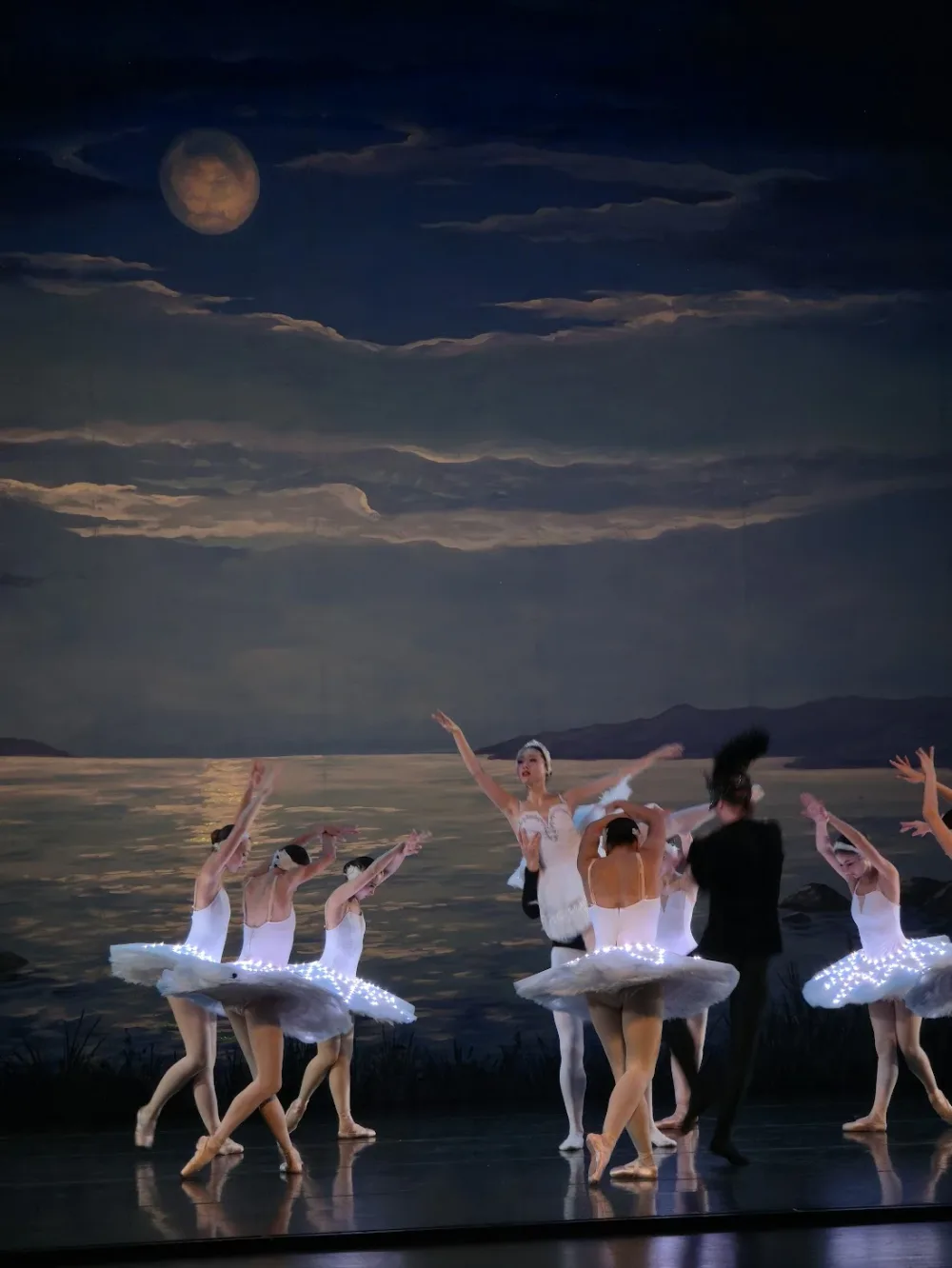
The effect is not a glow. Small cool-white points are set into the tutu plate itself in a scattered star pattern, perhaps forty to a skirt, so that each dancer carries a horizontal disc of light at the hip. Against a painted lake and a low blue wash, the discs separate. One counts bodies instead of estimating them. When the corps moves in canon the light travels across the stage as a series of discrete events rather than as a single brightening, and the choreography becomes legible in a way that the standard white wash actively prevents.
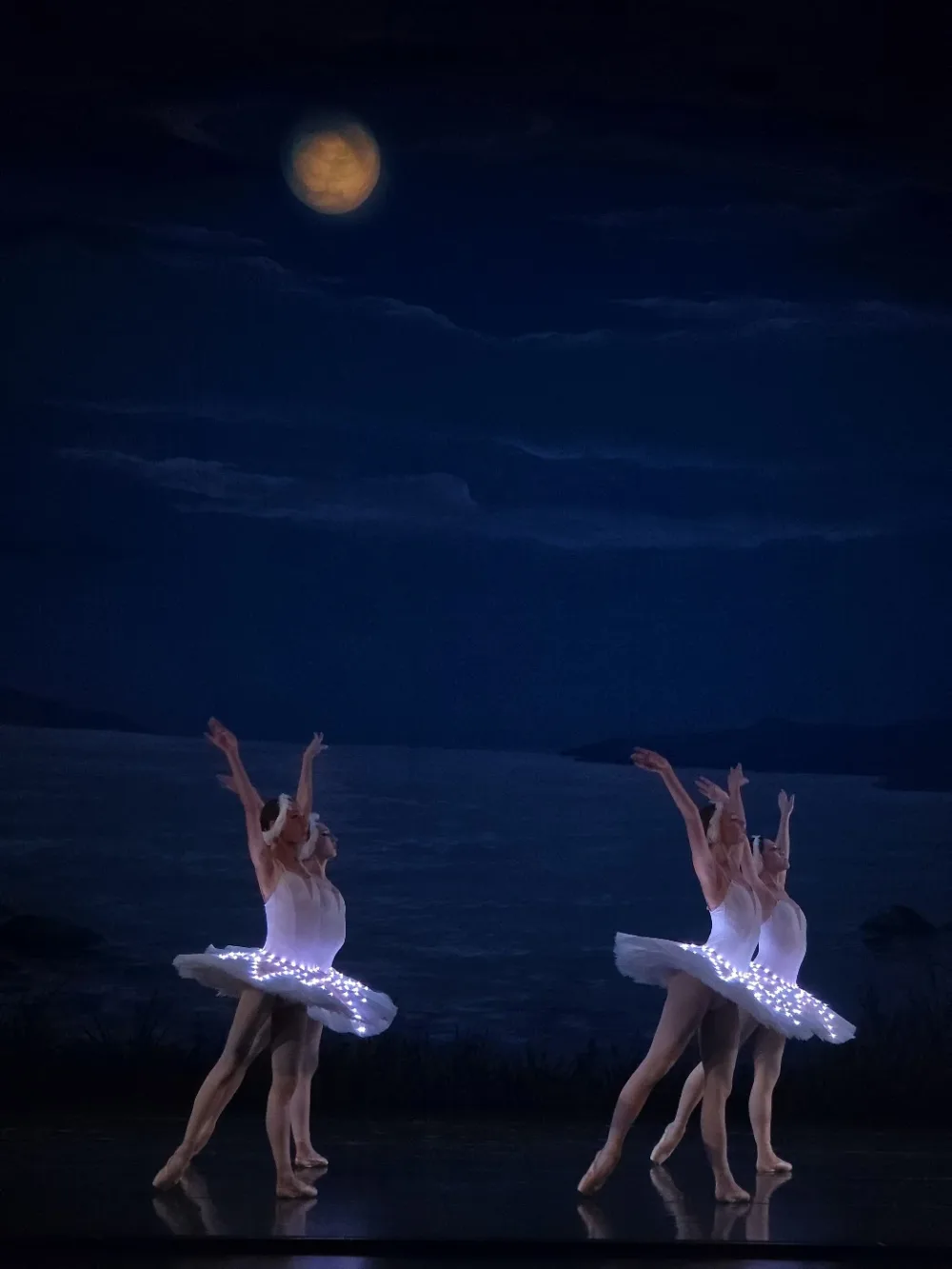
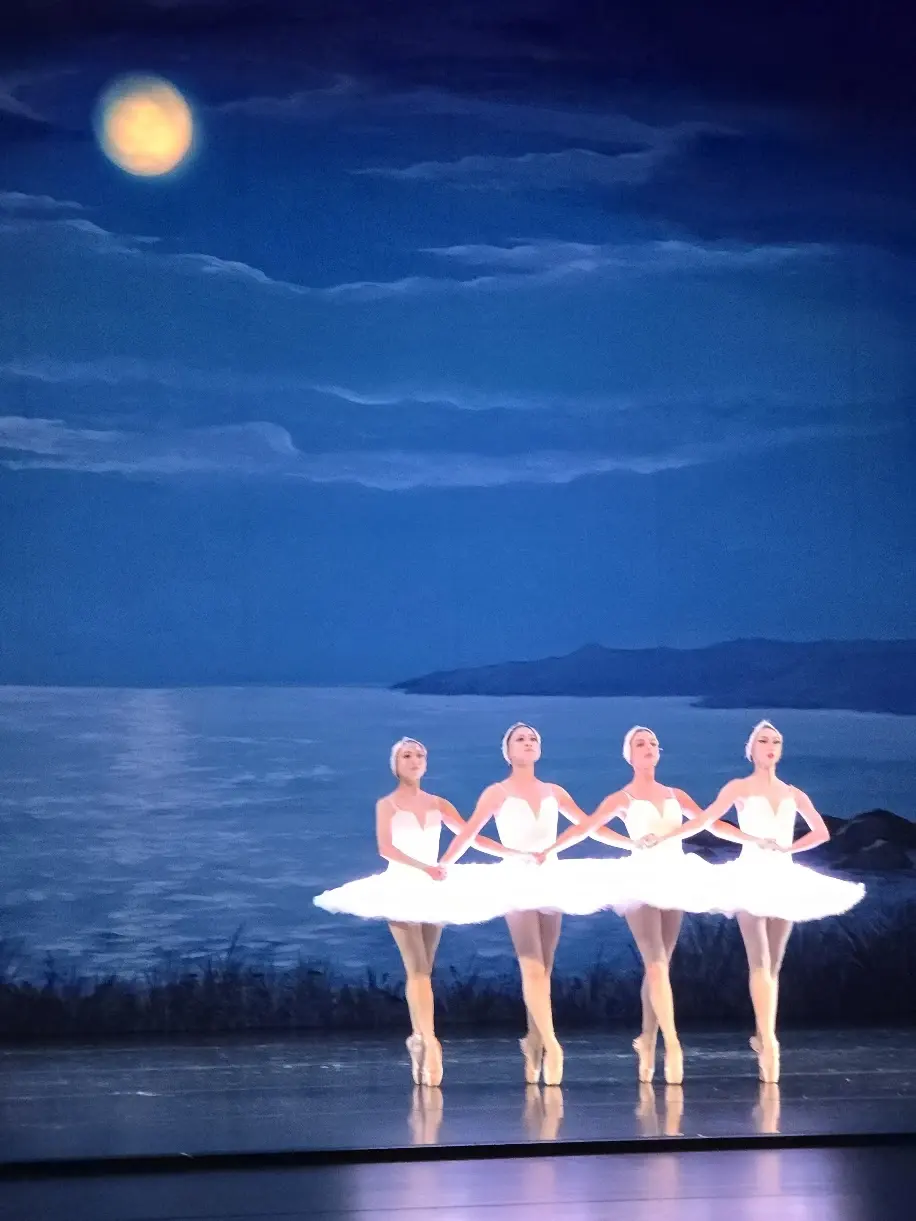
The staging is otherwise conservative, which is the correct decision and an unfashionable one. The Jester is kept, capering in motley through the court scenes as he does in every Ukrainian and Russian redaction and in almost no Western one. The cygnets are four and they link arms crosswise and do the thing. Nobody has been asked to reinterpret anything.
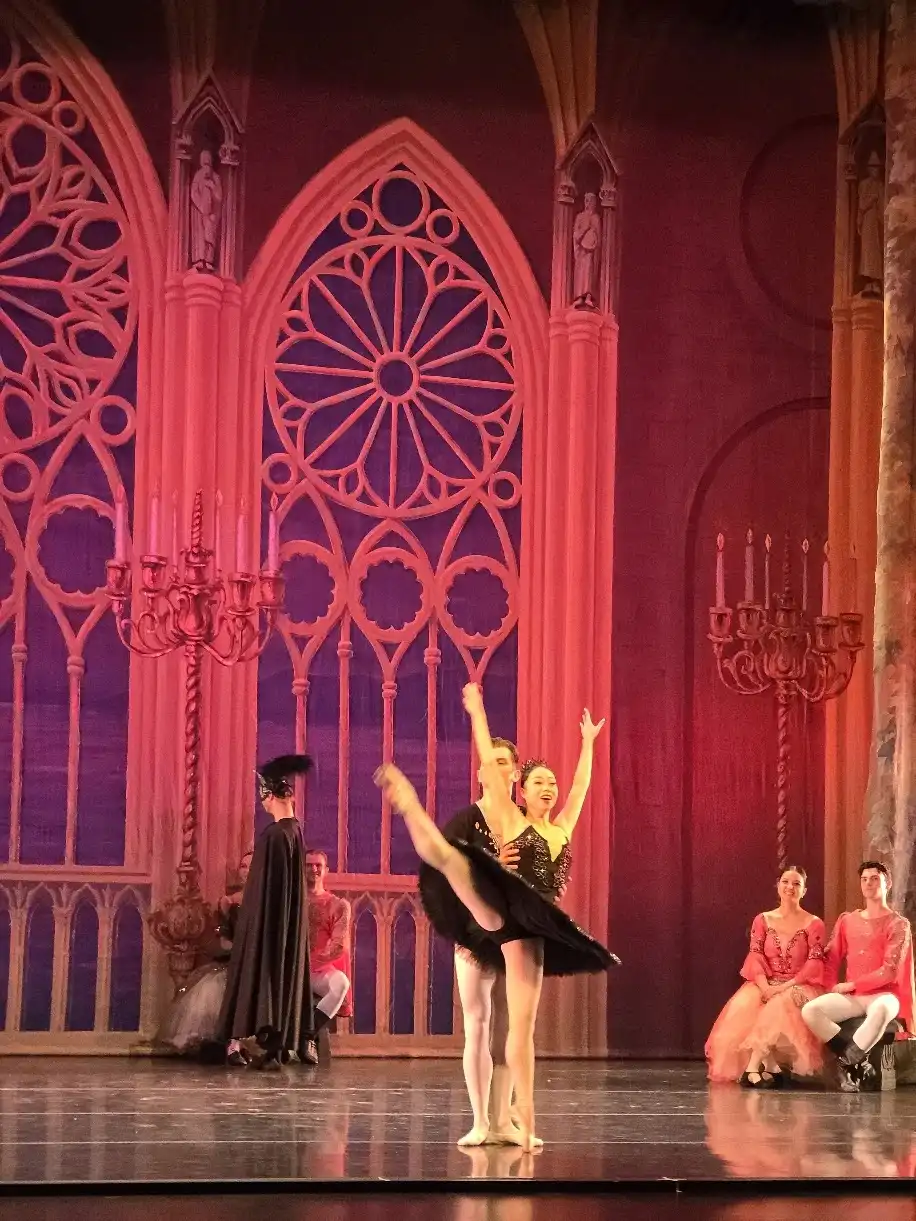
Materials, unglossed: LED point sources, tulle, a sprung floor reflecting at about half value, a painted backcloth of lake and moon, cool white for the swans, a feathered headdress, black velvet, a rose window in gothic tracery rendered in coral and rose, and one caped silhouette with no light on it anywhere.
That last item is the production’s second good decision. The sorcerer — von Rothbart, the thing in black with the feathered headdress — carries no light at all. In a staging where every sympathetic body is a source, the villain is defined by being the one hole in the illumination. He crosses in front of the lit corps and reads as an absence moving through them. It is the cheapest possible characterisation and the most effective thing in the evening, and it costs the production nothing because it consists entirely of not doing something.
One cannot praise the idea without noticing where it stops. The four cygnets dance the pas de quatre unlit, in plain white, which is defensible — the number is about precision of the ankle and the light would be noise. The third act is harder to forgive. The ballroom arrives in coral and rose under conventional front light, the rose window glowing behind the court, and the whole apparatus of the first half simply does not appear. Odile takes the black tutu and the thirty-two fouettés without a single point of light on her, in a production whose title promises a symphony of them. The company proved it could characterise through illumination and then set the tool down for an entire act.
Somewhere in the second act a small cohort of children crossed as doves. They were perhaps seven or eight years old, they were entirely composed, and nothing in the company’s published material, the venue listing or the tour press accounts for them at all. Touring companies cast local students constantly and credit them never. The doves remain unexplained here because they are unexplained everywhere.
A second audience was in that house, and it was not the one the Harris sells to. Two Ukrainian-language creators posted the evening from backstage, standing beside a ballerina still in her tutu, narrating in Ukrainian over footage of the Jester and the black tutu, framing the night as Ukrainian artists presenting a hundred-and-fifty-year-old ballet in an American metropolis. One of them carries 140,000 followers and tagged the post Ukrainians in America. A company assembled from the ballet of the National Opera of Ukraine is touring North America continuously because touring is what is available to it, and the people who came to see it included a constituency for whom the evening was not principally about lighting design. That sits underneath the whole production and the production says nothing about it, which is probably correct.
Both of those posts call the production Symphony of Fire. One of them pluralises it to Fires. There is no fire in it.
The company is a touring operation rather than a resident one: founded by Oleksandr Stoianov out of dancers from the ballet of the National Opera of Ukraine, first substantial tour thirty-five theatres across France from 2014, and since then a near-permanent circuit. No cast list for the 14th exists on the company’s event page, on the Harris listing, or anywhere else reachable, which is ordinary for a one-night date and still a discourtesy to the dancers. Tickets ran fifty-two to a hundred and twelve dollars. The Harris seats 1,499.
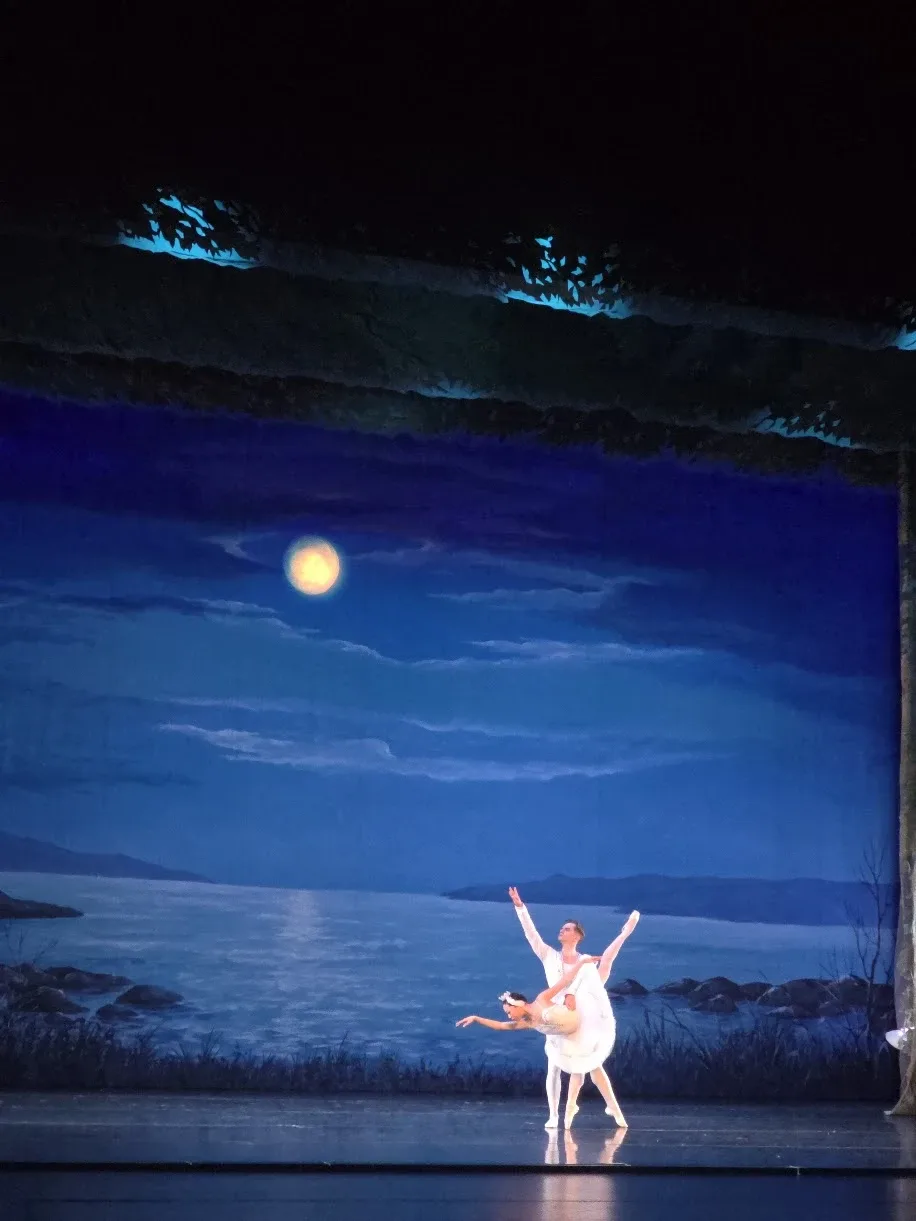
It did not sell. There were whole rows empty in the upper tier and gaps on the main floor at curtain, which on a Wednesday in October against a company most of this city has never heard of is not a mystery, merely a waste. I had been admiring the engineering of the tutus for some minutes before it occurred to me to watch the dancing, which is its own small failure of attention.
The room corrected me. At the first entrance of the lit corps, phones came up across the house in a wave and stayed up, then went down again within a few bars once the swans began moving together. Nobody filmed the cygnets, which is the only number in the ballet everybody can already hum. And at the end that thin house stood up. Somebody filmed the bow from the dark and posted it at eleven that night, and what carries on the recording is not the image but the volume — sustained, unembarrassed, going on past the point where an audience of that size has any business still clapping. That is not an audience the production failed to find. It is an audience the city failed to send.
Cover image: Swan Lake: Symphony of Lights, Harris Theater, October 14, 2026. Photo: Color&Noise