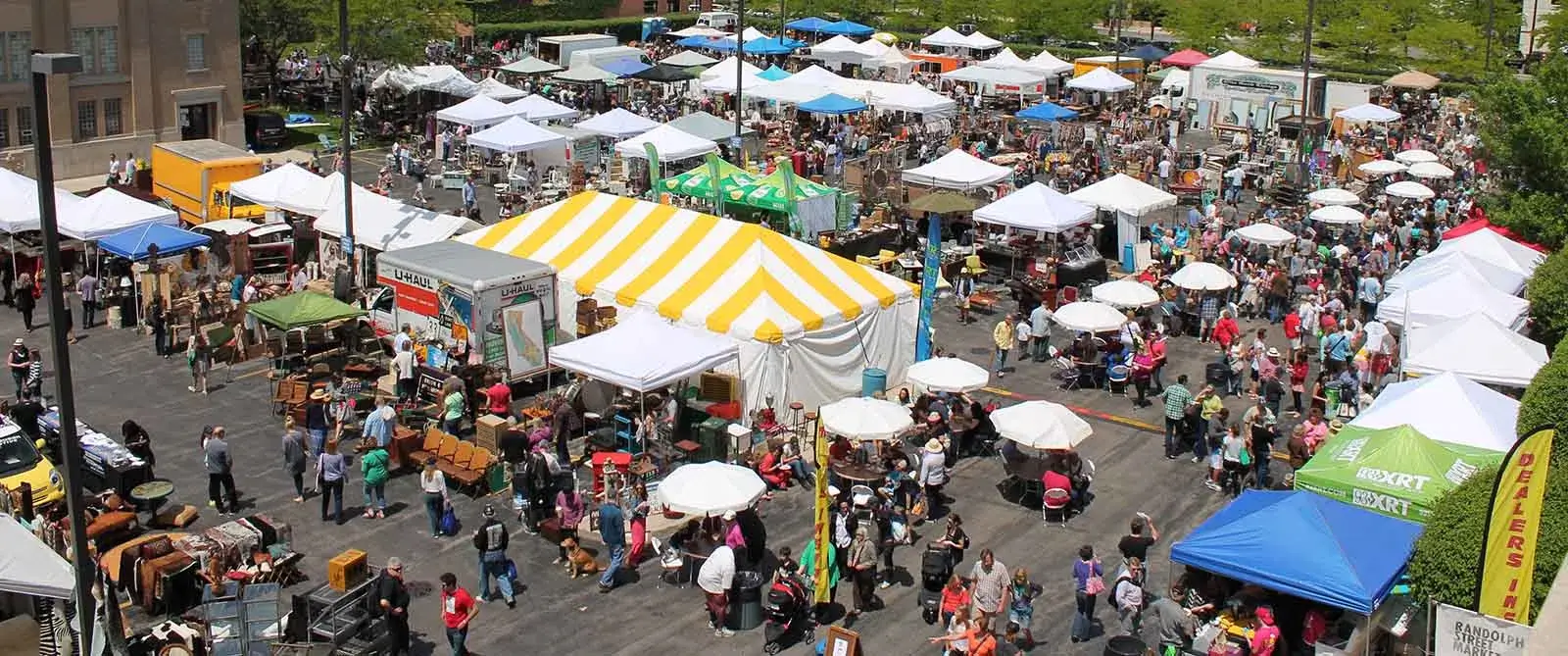
The old union hall on Randolph holds heat about four degrees longer than the street does, which in late July means the indoor half of the market empties out by two in the afternoon and the tent out back fills up. The Randolph Street Market ran its summer sessions on July 25th and 26th and again on September 26th and 27th, at 1341 West Randolph, ten in the morning until five.
It gets confused with the Maxwell Street Market constantly, including in print, including by me until somebody put me right. They are two different markets, four miles apart, with different organisers and nothing in common but the word market and a lot of secondhand objects.
What is on the tables, unsorted: mid-century teak, vintage Levi's, costume jewellery in flats, hand-tinted photographs, pressed vinyl, rhinestone brooches pinned to velvet, old newspaper plates, and a run of 1920s-looking shirts and suspenders that somebody had clearly assembled as a set.
What a Booth Costs
Here is the number that explains the whole market. A vendor pays somewhere between seven hundred and seven hundred and fifty dollars for a weekend booth. The objects on most of those tables are priced between five and forty dollars. That arithmetic only resolves if you sell volume or you sell one good thing, and the dealers who come back every season have worked out which of those they are.
The artist Pugs Atomz took a spot in the big tent for the July weekend, which is a different proposition again — a working Chicago artist selling his own output next to people reselling other people's, at the same booth rate.
Who Built This Block
The hall at 1341 West Randolph went up for a plumbers' union, in a district that was wholesale food — meat, produce, refrigerated trucks at four in the morning, and almost nothing open to the public. Restaurant Row is built inside that shell. The market is one of the few things on the strip that still sells objects rather than dinner, in a neighbourhood that has been priced for dinner for about fifteen years now.
The “noise” of this market is almost entirely transactional — no music to speak of, just the particular sound of several hundred people picking things up and putting them down again, and a lot of very specific questions about provenance.
A woman with grey hair in a bun spent the July Saturday walking the stalls with her granddaughter, who was drinking something purple and being allowed to choose one thing. They were still deciding at four.
Cover image: West Loop / Wikimedia Commons