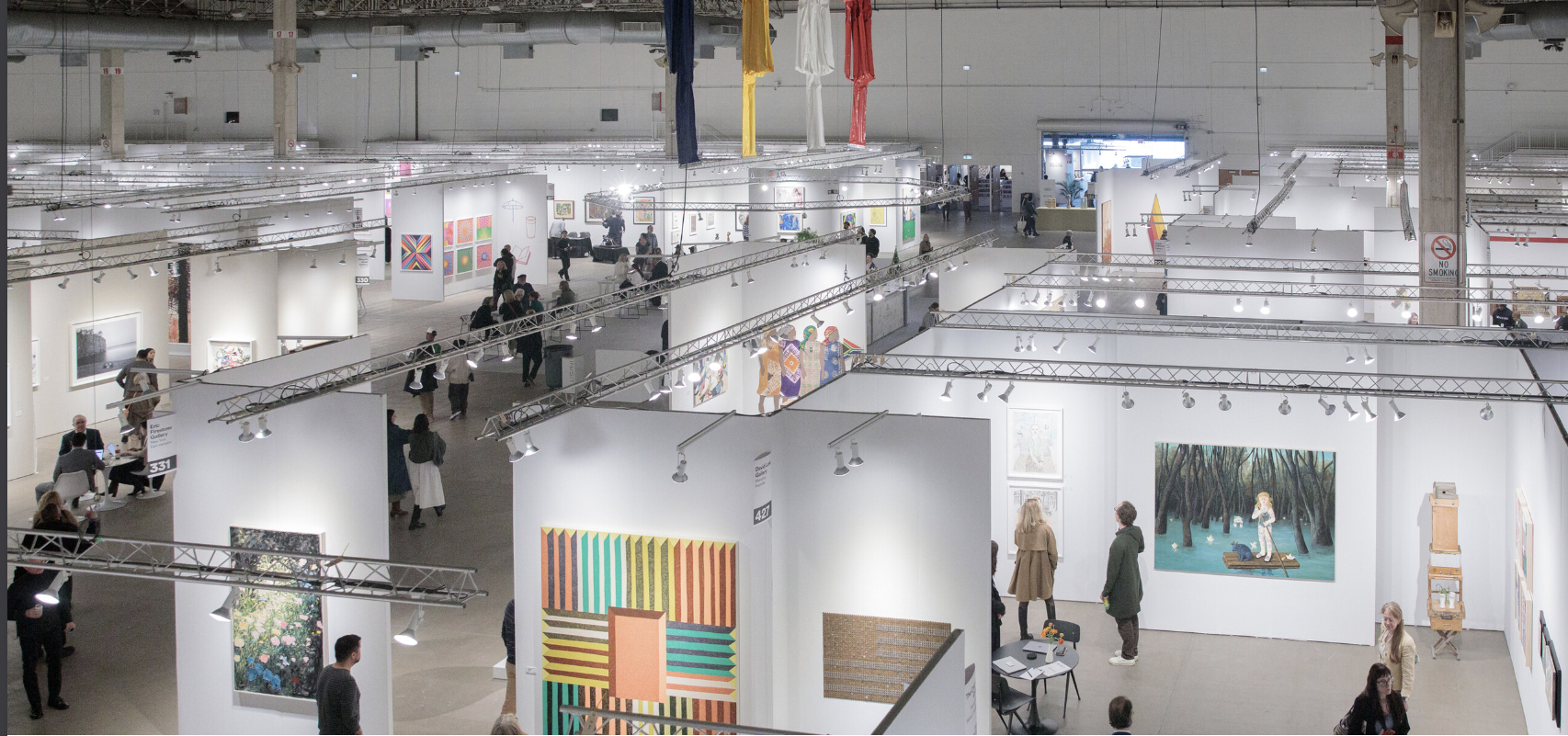
The seasonal migration to Navy Pier has begun. EXPO Chicago returns this weekend (April 9–12), and while the usual spectacle of 130-odd galleries can feel like a marathon of visual noise, there is genuine rigor to be found if one knows where to look.
Under the new stewardship of Frieze, the fair feels a bit more curated, less like a sprawling bazaar and more like a focused dialogue. I spent some time previewing the rosters, and while there is plenty of the usual "fair art," three names stood out for their refusal to be merely decorative.
Aliza Nisenbaum
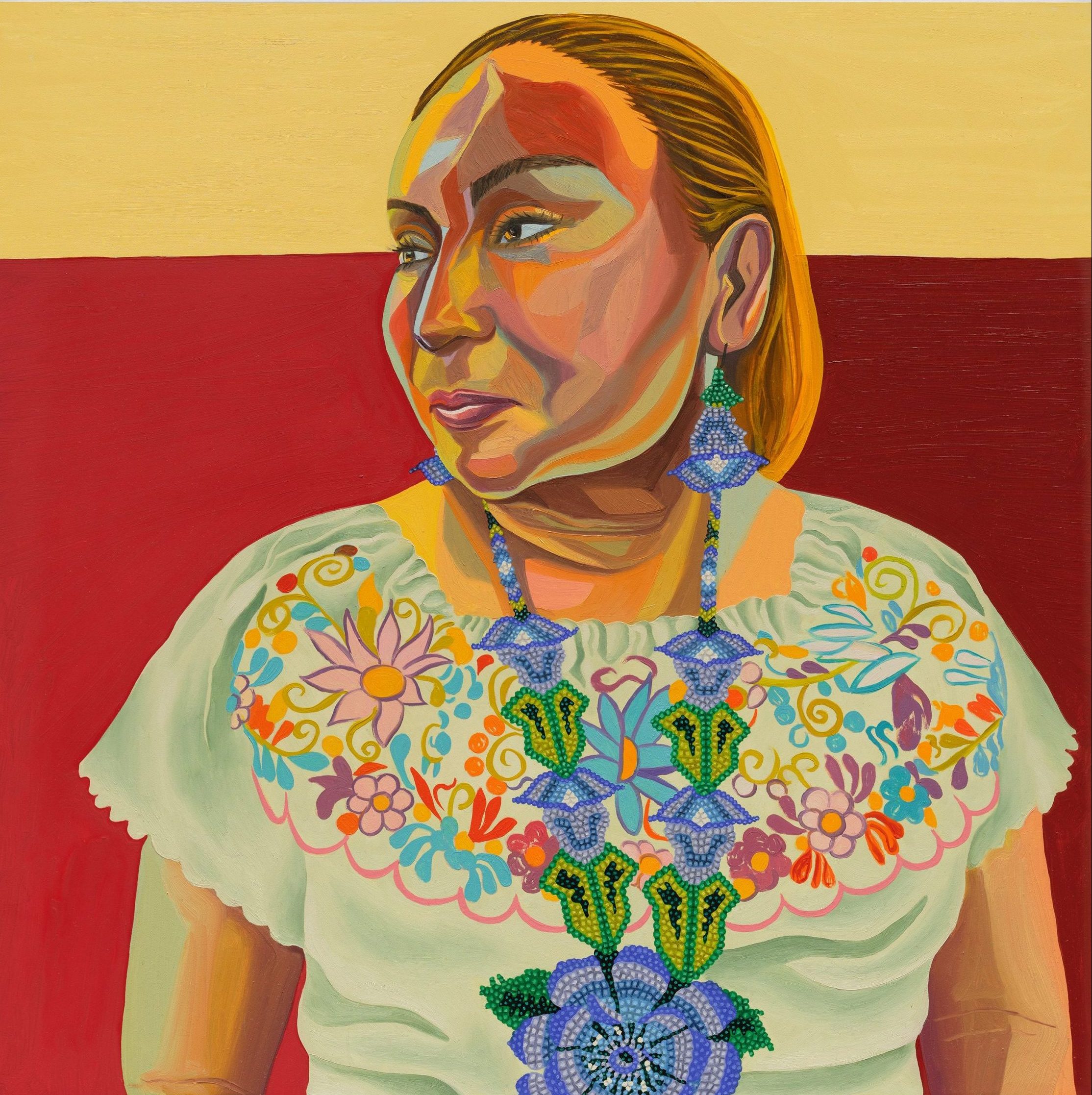
Presented by Anton Kern (New York) and Regen Projects (Los Angeles)
I have long admired Nisenbaum’s ability to resurrect the dignity of the formal portrait without sliding into the saccharine. Her work often focuses on immigrant communities and labor, but it is her use of color—vibrant, saturated, and almost pulsating—that demands attention. At EXPO, she is presenting smaller scale works that echo her upcoming mural for the Obama Presidential Center.
What fascinates me here is the "weightedness" of her subjects. They aren't just figures on a canvas. They possess a physical presence that feels rooted in the tradition of Mexican Muralism, yet filtered through a contemporary, intimate lens. It is portraiture that actually bothers to look at the sitter.
Tawny Chatmon

Presented by Galerie Myrtis (Baltimore)
If you find yourself weary of the digital flatness that dominates so much contemporary photography, Chatmon is your necessary antidote. She treats the photographic print as a mere substrate, layering it with intricate handstitched embroidery and threadwork.
The craftsmanship is staggering. By applying these labor-intensive "craft" techniques to portraits of Black childhood, she creates a visual language of protection and sacredness. It is a subtle but sharp critique of how Western art history has traditionally allocated "preciousness." These aren't just photographs. They are icons.
Yvette Mayorga
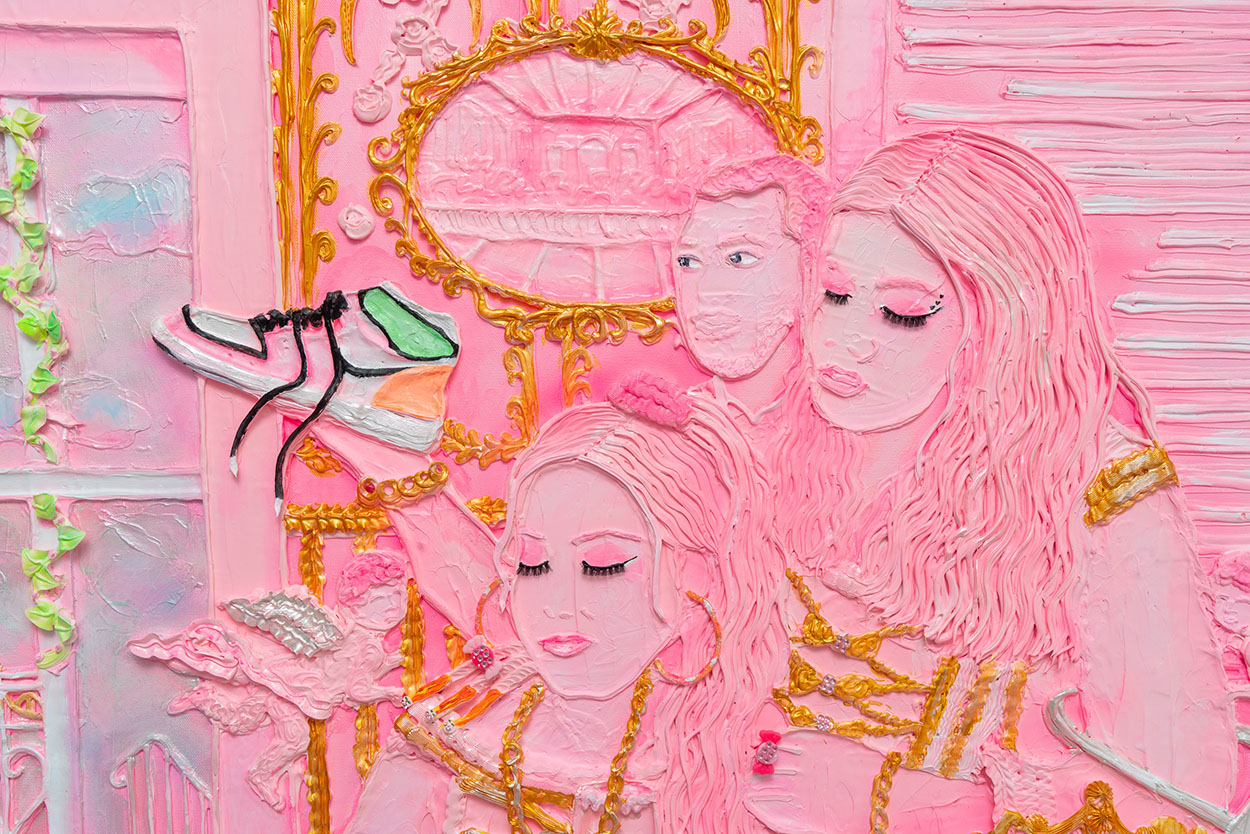
Presented by Monique Meloche (Chicago)
One cannot discuss the current Chicago scene without acknowledging Mayorga. Her work is a sensory overload of pink-specifically a "Barbie" or "confectionery" pink-that she pipes onto the canvas using cake decorating tools.
While the initial impression is one of rococo excess, the intellectual underpinnings are far more biting. She uses the aesthetics of the "sweet" to explore the bitter realities of the American Dream, border politics, and Latinx identity. It is a brilliant subversion. She takes the decorative, feminine, and domestic and turns it into a weapon of social critique. It is highly disciplined maximalism, and it is precisely what a fair of this scale needs to keep it from feeling stagnant.
I suggest you start in the Focus section. It is where the younger galleries reside, and where the air feels a bit less thin. If you find yourself overwhelmed by the sheer volume of "stuff," simply find a Nisenbaum portrait and stand there until your pulse slows down.
Are you planning to attend the opening night, or do you prefer to wait for the weekend when the initial frenzy has subsided?