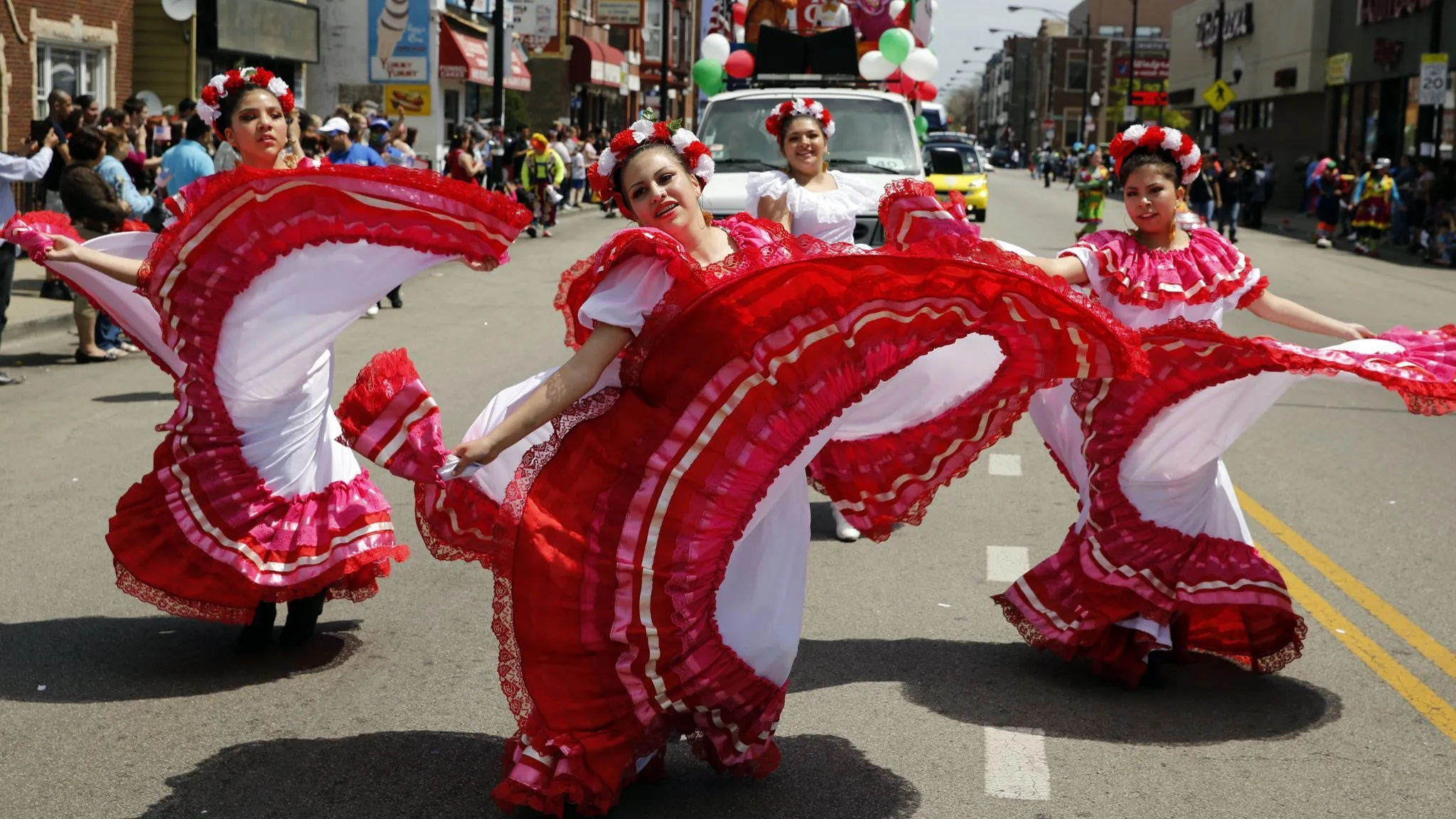
There was no Cinco de Mayo parade in Little Village this year. There was none last year either. The Cermak Road Chamber of Commerce, which had run it for 40 years, and Casa Puebla pulled it over fears of immigration raids, and a four-decade tradition is now two years into an absence that nobody is calling permanent and nobody is calling temporary.
A calendar of Chicago’s summer ought to include the things that did not take place, because in 2026 the cancellations tell you more than the lineups do.
What a Parade Is For on a Commercial Strip
It is worth being precise about what was lost, and it is not sentiment. A neighborhood parade on a commercial corridor is an economic event. It fills restaurants, moves inventory out of storefronts, and gives small businesses on a specific stretch of street one predictable day of volume they can plan a year around. For Little Village, parade weekends are reckoned in millions of dollars for local restaurants, bars and shops.
So the decision the chamber of commerce made is worth sitting with, because a chamber of commerce exists to generate exactly that traffic. An organisation whose entire purpose is commerce on 26th Street looked at the risk to the people who would attend and chose to forgo the revenue. Twice.
The Shape of the Summer
What followed across the next five months ran along the same line. Fiesta del Sol went ahead in Pilsen for a 54th year, but with trained response teams, a reporting system, and know-your-rights education for vendors and volunteers. Michelada Fest, cancelled in 2025 for the same reason this parade was, came back in June. El Grito announced its own return the same month. El Grito scaled down and returned to Grant Park in September to visibly thin crowds, with its civic ceremony livestreamed for people who felt unable to attend. The 26th Street Parade in September did roll, with community groups distributing know-your-rights material and watching the route for federal agents as it passed.
Laid out in order, that is a summer measured in degrees of retreat: cancelled, scaled down, held under guard, held at all. The Cinco de Mayo parade is the first entry, and the only one on the list that never got a crowd to count.
An Absence Is Hard to Photograph
This is the practical problem with reporting a story like this, and the reason absences get undercovered. A festival that happens generates images, attendance figures, quotes at the gate and a review. A festival that does not happen generates a short notice and an empty Sunday. There is no footage of the thing that was called off, and the people most affected by the calling-off are precisely the people least able to speak about it on the record.
Two years is long enough that a tradition starts to lose its muscle memory. Forty years of a parade is a body of knowledge — who marches where, which businesses sponsor what, which families have done the same job since the eighties — and that knowledge does not survive indefinite dormancy.
The strip is still there. The chamber is still there. On the first weekend of May, 26th Street was just a street.