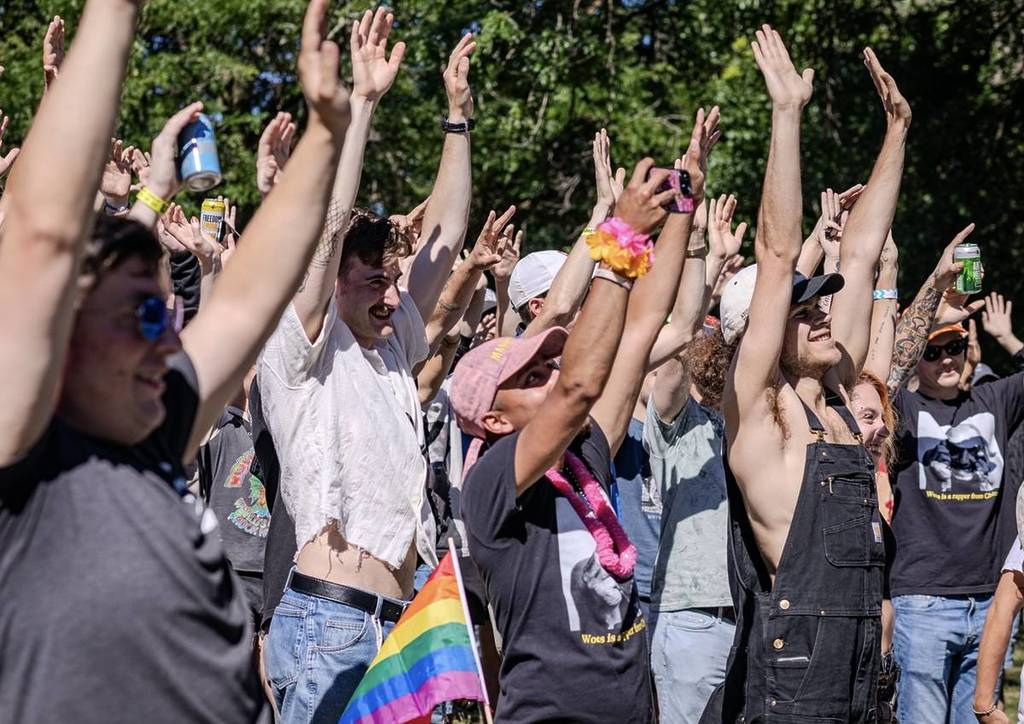
The Logan Square Arts Festival ran June 26 to 28 with artists, music and food. It has operated since 2009, which places its entire existence inside the period during which Logan Square underwent the fastest neighbourhood transformation in Chicago.
That coincidence is the most useful thing about it. A festival founded in 2009 in Logan Square is a seventeen-year instrument for measuring what happened to Logan Square, and one can read the arc in the event itself rather than in census data.
The Barometer Reading
One cannot discuss this neighbourhood without acknowledging the speed. Logan Square went from affordable to unaffordable inside a decade and a half — faster than Wicker Park managed, with the boulevard system and the Blue Line accelerating it. The artists who made the area legible to capital are substantially gone.
An arts festival in that context is doing one of two things. It is either the continuing expression of a working creative population, or it is the cultural amenity that a transformed neighbourhood buys to maintain its self-image. Most such festivals are some of both, and the honest way to find the ratio is to ask how many exhibitors live within walking distance.
Compare the Glenwood Avenue Arts Fest in Rogers Park, where the answer is most of them, because that district was built as an artist-retention project. The contrast is not flattering to Logan Square and it is not Logan Square’s fault.
Vibes On Logan Is the Better Story
Which brings up the event that deserves the coverage this one receives. Vibes On Logan ran the second Sunday of each month from May 17 to September 13 at 2600 West Logan Boulevard — free, rotating DJs, grassroots, on the boulevard itself.
The city’s festival listings gave it a single line. No gate, no chamber of commerce, no juried booths. A recurring free monthly event on a public boulevard, programmed by DJs, is a considerably purer expression of neighbourhood culture than a three-day arts festival with vendors, and it costs nothing to attend.
One also notes that it ran five times across the summer while the festival ran once. Frequency is its own argument: an event that recurs monthly becomes part of how people use a street, where an annual festival remains an occasion that happens to them.
The the published calendars carried both, listed as equivalent weekend options, which they are not.
If the festival’s booths begin to feel interchangeable, as they will by the second block, leave and walk the boulevard west to 2600. Stand on the grass there on a second Sunday until the set changes. That is the neighbourhood; the festival is the brochure.
Cover image: Warren LeMay / Wikimedia Commons (CC BY-SA 2.0)