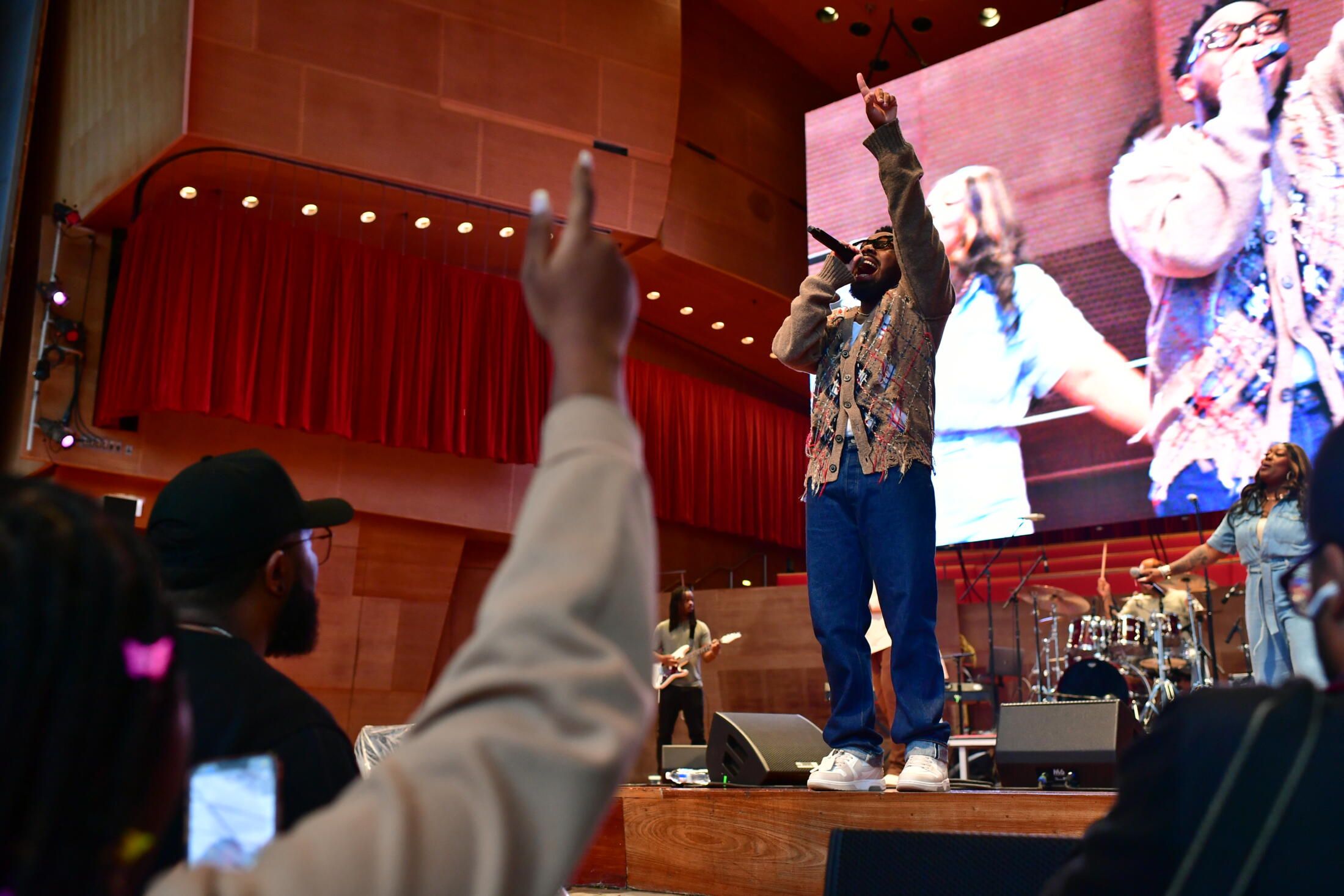
The Chicago Gospel Music Festival took the Jay Pritzker Pavilion on July 24 and 25, free. Tasha Cobbs Leonard, Hezekiah Walker and the Love Fellowship Choir, and Ricky Dillard and New G headlined.
Dillard is the name to start with, because he is from here. A Chicago choir director on a free downtown stage in the city that produced the modern gospel tradition is the whole festival in one booking, and it is the kind of homecoming that gets undersold as local-interest programming.
Chicago Built This Music
It is worth being blunt about the lineage, because it is routinely mislaid. Gospel as a recorded, arranged, professional form was largely assembled in Chicago — Thomas A. Dorsey doing the composing and publishing, Mahalia Jackson doing the singing, both of them working out of South Side churches during and after the Great Migration.
That makes a free festival at the Pritzker Pavilion an inheritance rather than a curiosity. The city is not hosting a genre it admires from a distance; it is programming its own invention, in the way it also now does for house music and has long done for the blues.
Three Chicago-born musical forms, three free city festivals, all within about ten weeks of each other. Laid out that way, the DCASE summer calendar is a reasonably serious argument about what this city has contributed to American music, delivered without a ticket price.
The Choir Is the Instrument
The programming choice worth noticing is that two of the three headliners brought choirs. Hezekiah Walker and the Love Fellowship Choir, and Dillard’s New G, are not solo acts with backing vocals. They are ensembles, and gospel at that scale is a different proposition in an outdoor pavilion than a singer with a band.
A choir needs the room to hold a mass of voices without smearing them, and the Pritzker Pavilion’s overhead sound trellis is one of the few outdoor systems in America that can genuinely do it. Gehry’s bandshell gets discussed as architecture and sculpture. It is also, functionally, a very good speaker, and a festival built around choirs is the best possible test of that.
Tasha Cobbs Leonard is the contemporary commercial end of the bill, and the festival needs her for the same reason Blues Fest needs Kingfish — to keep the event in the present tense rather than in tribute mode.
Programme details ran through the city and Choose Chicago.
Two free nights, three choirs’ worth of voices in a Frank Gehry bandshell, and a Chicago choir director headlining the festival of a genre his city largely wrote. Nobody had to pay to be there.
Cover image: Courtesy Choose Chicago