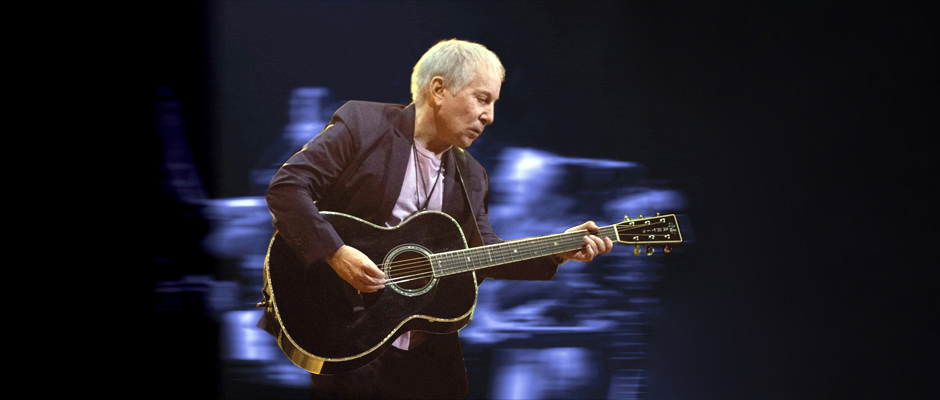
There is a particular hush at Ravinia about four minutes before a show when the lawn stops eating, and on Friday July 17th it arrived earlier than usual because most of the audience had been there since six. Paul Simon walked out in a light pink button-down and jeans with an acoustic guitar and did not say much, and for two nights that was the mode.
He is eighty-four and has been performing longer than this festival has had a paved car park, through a folk duo, a solo catalogue, a South African record that started an argument that has not finished, and a decade of saying he was done. Nobody on that lawn needed the recap.
Lawn admission was twenty dollars. Thirteen thousand people across the two nights, both sold out. A twenty-dollar ticket to see Paul Simon is the single best value in Chicago live music and the festival knows it, which is why the lawn fills before the gates have properly opened.
Who Was On Stage
Edie Brickell stood to his left for much of both nights, smiling, singing harmony, occasionally not singing at all — a presence rather than a feature. The band was small by the standards of a legacy tour, which suited the room: Ravinia's pavilion rewards restraint and punishes anybody who tries to fill it with volume.
"Graceland" came out with the bass line further forward than on the record, which stripped the studio off it and left four people playing a song. "The Boxer" was the one that got the lawn to stop talking entirely. He let the last verse sit almost unaccompanied, and thirteen thousand people on folding chairs went quiet enough that you could hear the Metra pass.
The Hall Is Six Days Old
The renovated Hunter Pavilion had been open to audiences for six days when Simon played it. Ravinia spent somewhere between seventy and seventy-five million dollars on a venue-wide rebuild, and the acoustic claim being made for the new hall is sharper definition — which an eighty-four-year-old singer with a quiet delivery and an acoustic guitar is the hardest possible test of. It held. The consonants arrived.
Whether that money reaches the lawn is a different question, and the answer is mostly no. The lawn is still a field with a speaker array pointed at it, and the people on it were hearing a competent reinforcement of a show happening somewhere else. They did not appear to mind, because the lawn is not really about fidelity; it is about being outdoors in July with a bottle of wine and somebody else's children running past.
The train is the other half of this venue. Ravinia has its own Metra halt on the Union Pacific North line, and the Ogilvie platform before both shows was full of people in their sixties carrying folding chairs and cooler bags. Somebody on the northbound told their friend they had been coming to this festival for forty years and had never once driven.
Twenty dollars, two nights, and a man who has been saying he is finished since 2018. He is not finished.
Cover image: Martin Theatre, Ravinia Festival / Wikimedia Commons