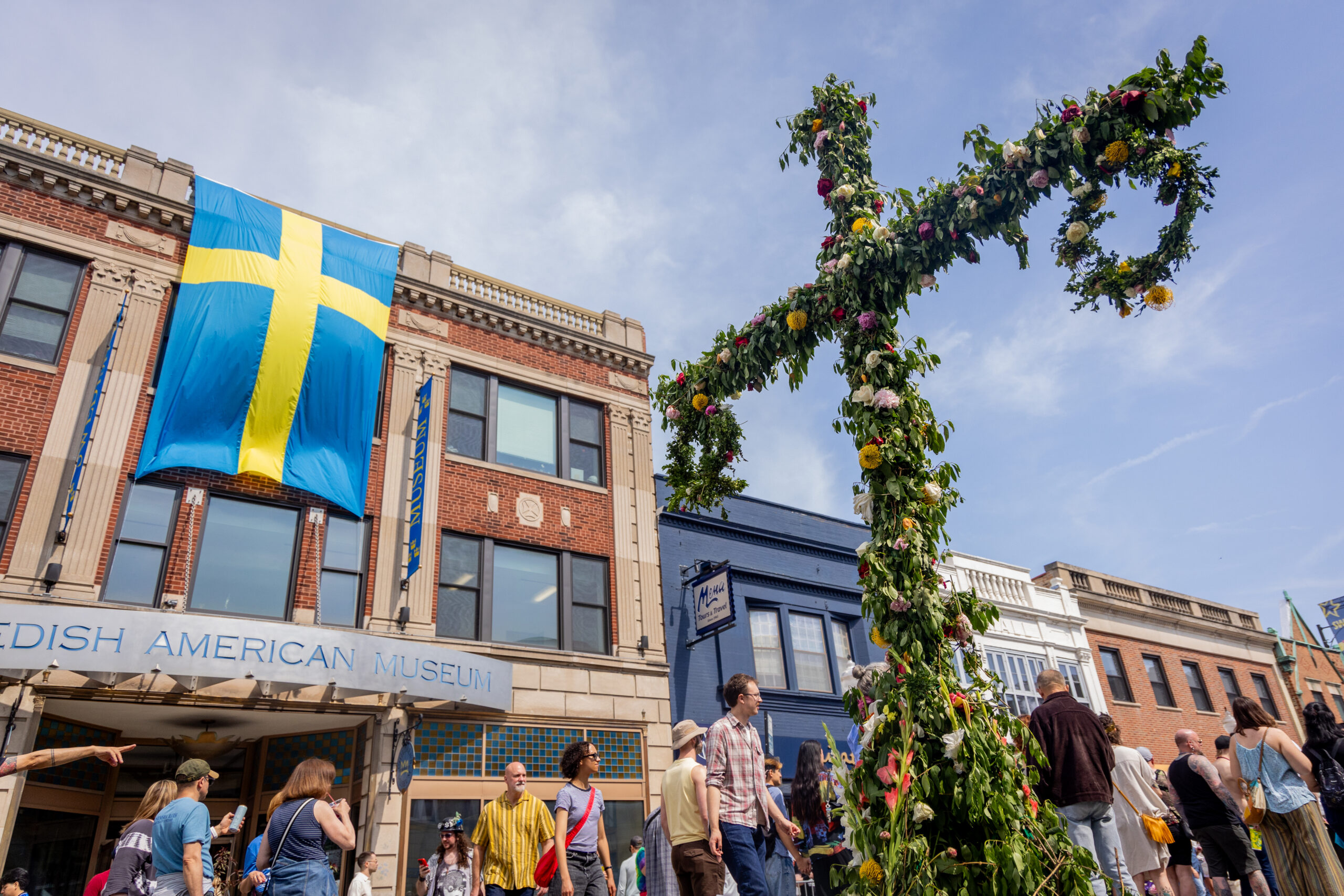
Andersonville Midsommarfest closed Clark Street from Foster to Gregory from June 12 to 14, five stages, $10 suggested donation, sixtieth year. It is a Swedish midsummer celebration in the historically Swedish neighbourhood, and the sixtieth anniversary is a reasonable moment to ask what that sentence still means.
What Is a Heritage Festival at Year Sixty
The Swedish part of Andersonville is now largely institutional rather than residential. The Swedish American Museum anchors the strip, a handful of businesses carry the lineage, and the water tower still says what it says. The people living in the flats above Clark Street are, by and large, not Swedish.
What Andersonville is instead is one of the queerest commercial strips in Chicago, with a substantial Middle Eastern business presence along the same blocks, and a reputation as the part of the North Side that gentrified without entirely flattening. Three distinct populations on one street, one of which supplies the name of the June festival.
That could be read cynically, as heritage branding outliving the heritage. The more accurate reading is that a midsummer festival turned out to be a portable idea. A celebration of the longest days of the year, with food and music on a closed street, does not actually require anybody present to be Swedish, and sixty consecutive years suggests the neighbourhood decided to keep it because it works rather than because it owes anybody.
Five Stages Is Serious
Worth noting the scale, because it gets lost behind the folk-costume photographs. Five stages is more than most ticketed festivals in this package managed. Do Division ran two. Riot Fest ran five and charged $319.
A $10-suggested neighbourhood festival programming five stages for three days is doing a genuine amount of booking, funded by a chamber of commerce and a voluntary gate. The Andersonville Chamber has been running this operation for six decades and it is among the most competently produced street festivals in the city.
The comparison worth making is with Lincoln Square, which does the same trick with German identity a few miles west — Maifest in May, an Oktoberfest in September, a German Day parade — and where the question of branding versus lived community is even sharper. Both neighbourhoods now perform an ethnic identity that has mostly moved out.
Sixty years of a Swedish festival on a street that is no longer Swedish, thrown by people who are not Swedish, for a crowd that does not care. It sells out the restaurants and everyone has a good time, which is possibly the most Chicago resolution available.
Cover image: Zagalejo / Wikimedia Commons (Public domain)