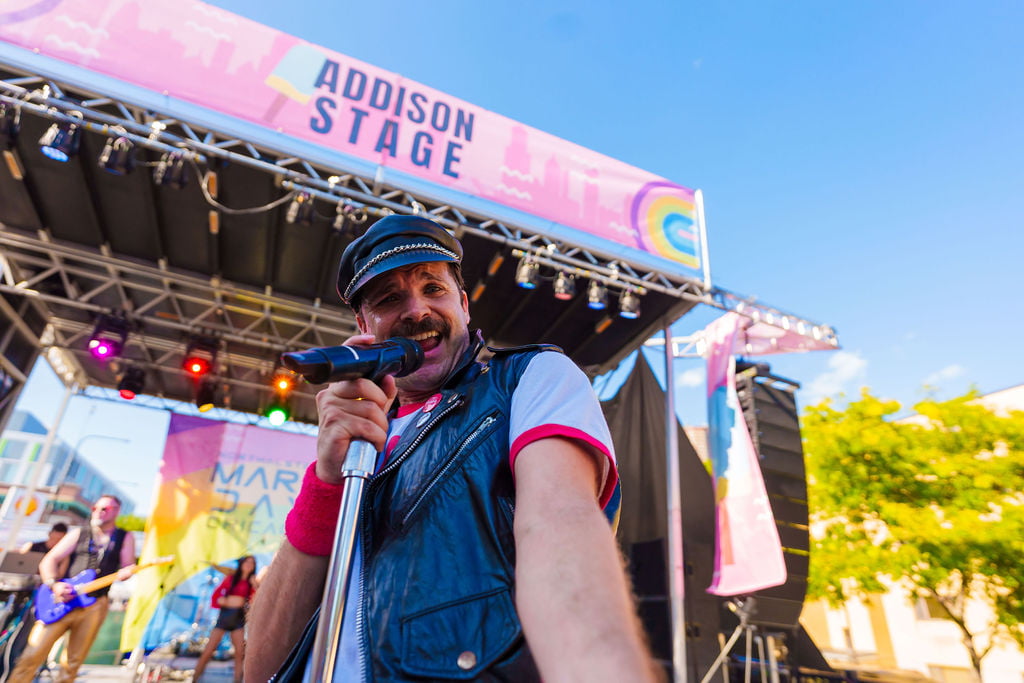
Northalsted Market Days ran August 7 through 9, its 43rd year, drawing more than 100,000 people across half a mile of Halsted between Belmont and Addison. Four stages, 250-plus vendors, drag and dance exhibitions, and a booking sheet that rewards close reading.
Keri Hilson and Frankie Grande headlined Friday, Dawn Richard on Saturday, and JORDY, Daya and the comedian Jessica Kirson closed Sunday. Saturday also carried Myki Meeks, Ric Wilson and Sizzy Rocket.
The Booking Formula, and the Exception
There is a method at work in the headliners. Keri Hilson and Dawn Richard are both 2000s R&B figures whose commercial peaks were managed by labels that did not entirely know what to do with them, and both have been reclaimed with real affection by queer audiences in the years since. Booking them is not nostalgia programming. It is a festival returning artists to the crowd that kept their catalogues alive.
Myki Meeks won RuPaul’s Drag Race that same season, which is about as timely as a street festival can be. JORDY is from Northbrook, which makes a Sunday headline slot on Halsted a local-kid story that the lineup announcement barely touched.
The most interesting name, though, is Ric Wilson — a Chicago artist whose whole project is the collision of disco, house and rap with explicit organising politics. Putting him on a Saturday stage on Halsted six weeks after the Pride Parade turned back toward protest is a coherent piece of programming, whether or not anybody planned it that way.
Half a Mile of Halsted
The scale is the thing people outside Chicago get wrong about Market Days. This is the largest street festival in the Midwest, and it is not a stage with stalls around it. It is a closed commercial corridor with 250 businesses and vendors operating along it for three days, in a neighborhood that has spent 43 years learning how to absorb that and then hand the street back.
The $20 suggested donation is the mechanism that keeps it working, and it is the same quietly load-bearing model that runs most of Chicago’s street fests — a gate that is technically optional, funding a business alliance that has to pay for barricades and insurance. It is worth asking what a suggested donation means at a Pride-season event, where the people most likely to skip it are the people with the least, and the answer is that the model survives because enough people pay anyway.
Full details sit with the Northalsted Business Alliance.
Two blocks of Halsted in August hold a hundred thousand people, four stages, a Drag Race winner from that season, and a Chicago rapper who sings about organising. The street is back to normal by Tuesday, which is the part that never stops being impressive.
Cover image: Via northalsted.com