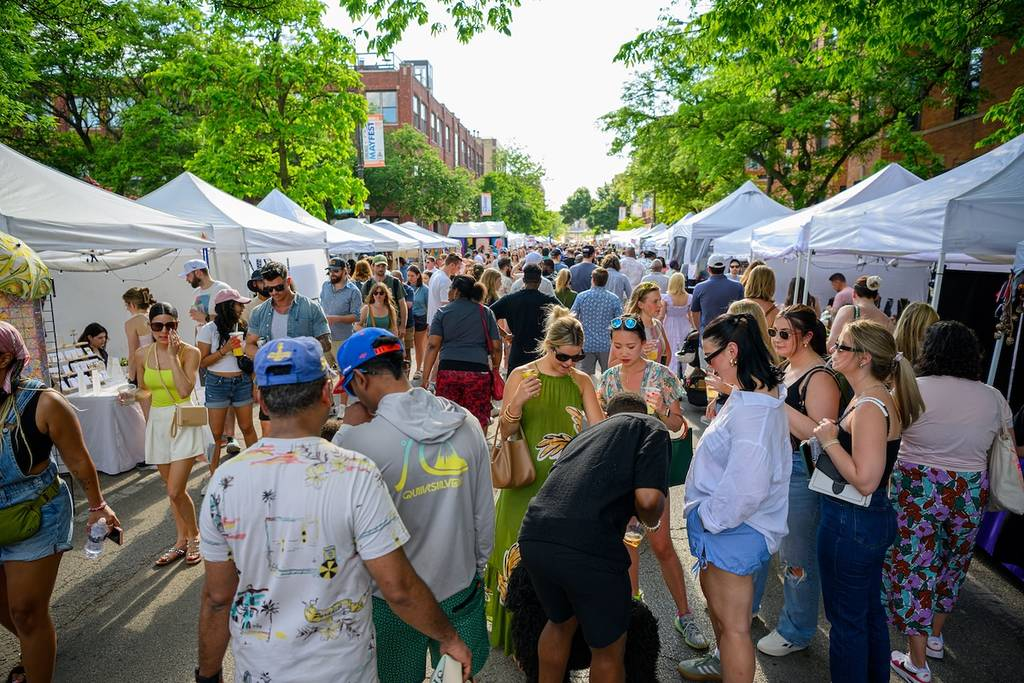
Lincoln Park Mayfest ran May 15 to 17 on the 1000 block of West Armitage with live music from local bands. It was the earliest street festival on the 2026 calendar — a full two weeks before Do Division, which gets called the season opener and is not.
Mid-May in Chicago is a gamble and everybody involved knows it. The lake is still cold enough to generate its own weather, the wind off it has not warmed, and a festival in the third week of May is betting on a forecast that has no business being trusted.
Optimism as Municipal Practice
This is a specific Chicago habit and it is worth naming. The city’s entire outdoor calendar is an act of collective optimism against a climate that does not reward it. Farmers markets move outdoors in early April. Navy Pier starts its fireworks on May 23. Street festivals begin in the middle of May.
None of that is warranted by the actual weather. It is warranted by how badly people want it to be over, and a festival on Armitage in mid-May is the purest expression of that impatience. You put out the barricades, you book four local bands, and you find out on the day.
The 2026 season went on to be a wet one. Rain defined Lollapalooza in July, tore up Douglass Park at Riot Fest in September, and delayed the Air and Water Show on both of its days. Whoever bet on a May weekend was, in the context of what followed, not obviously wrong.
Local Bands on a Residential Block
The scale is the other thing. One block of Armitage, local bands, no headliner, no international booking. That is what a street festival looked like before the form scaled up into the $319 three-day event, and a good deal of Chicago’s summer still runs at this size without appearing in any national coverage.
Lincoln Park hosts the considerably larger Taste of Lincoln Avenue in July, forty-two years old and repeatedly fought over by residents. Mayfest is the same neighbourhood at a tenth of the volume and generates none of that friction, which suggests the friction is about amplification rather than closure.
A block of Armitage, four local bands, and a city deciding in the middle of May that it had waited long enough. The summer that followed was wet, cancelled parades, and torn-up parks. Nobody on Armitage knew that yet, and the barricades went out anyway.