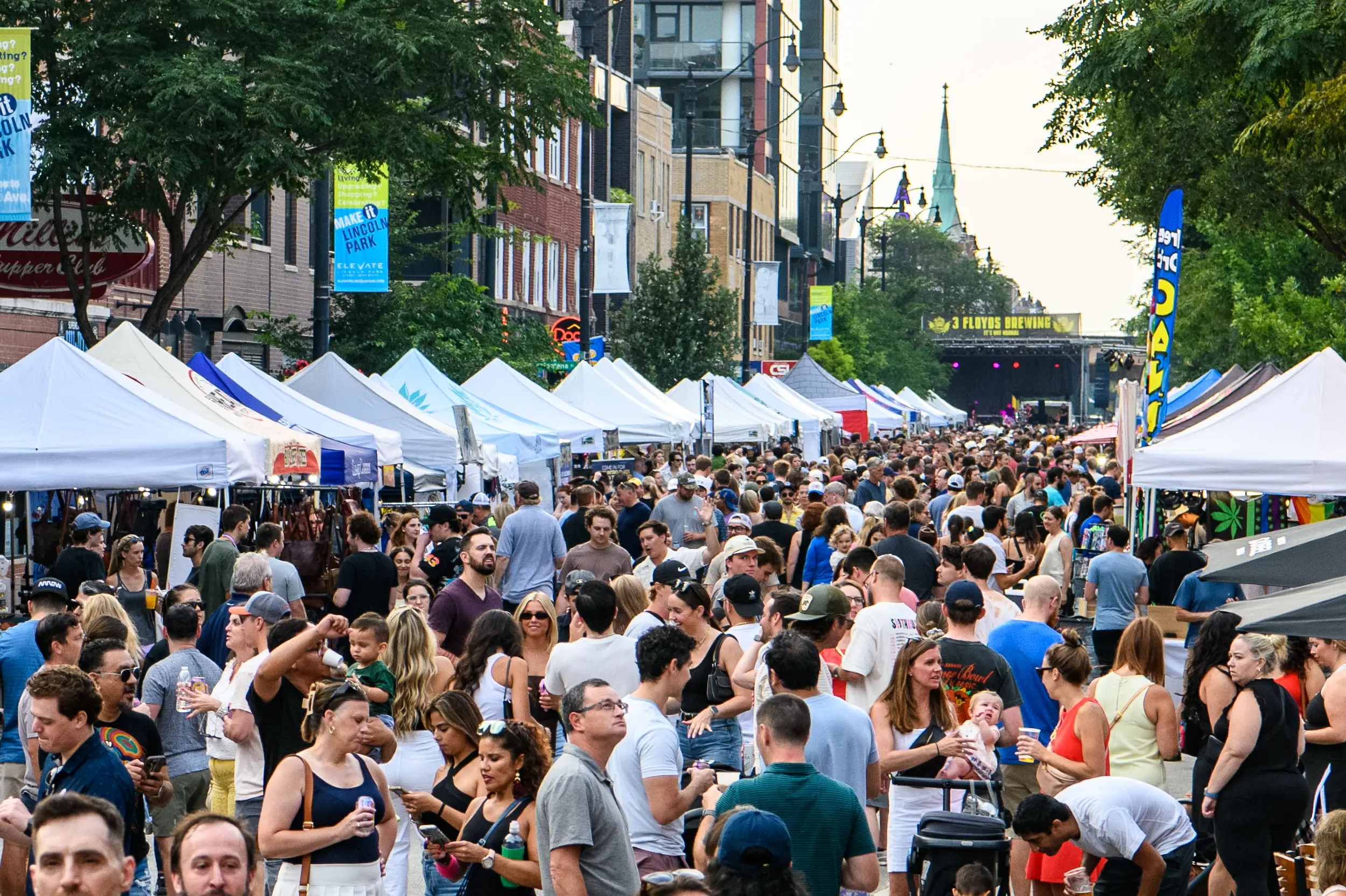
Taste of Lincoln Avenue ran July 24 to 26 around 2500 North Lincoln, $10 suggested donation, forty-second year. It is among the oldest street festivals in Chicago and it has survived multiple serious attempts to end it.
That survival is the article. Most coverage of a 42-year-old street fest defaults to fondness, and the more interesting material is in the permits.
The Noise Complaint as a Land-Use Weapon
Lincoln Park is among the wealthiest parts of Chicago, and a large amplified festival on a residential commercial street in a wealthy neighbourhood generates a specific kind of opposition. Not organising, not press conferences — complaints, alderman meetings, permit challenges and sound-limit negotiations, conducted by people with the time and standing to conduct them.
That process has been applied to this festival repeatedly across four decades, and the festival is still there. Whoever has been renewing that permit has done so against sustained, well-resourced resistance, and the history of those renewals is a genuinely under-reported piece of Chicago civic documentation.
Set it beside the other park-and-street fights of this summer and the asymmetry is instructive. In North Lawndale, residents spent September asking Riot Fest to leave Douglass Park and got a restoration promise and a signed deal through 2027. Jorge Angel told reporters his complaints about disrupted youth soccer went unanswered.
In Lincoln Park, complaints about a street festival have repeatedly reached the point of threatening its existence. Same city, same instrument, very different traction, and the difference tracks the median household income along the affected blocks.
What Forty-Two Years Buys
The festival itself is a food-and-music event on a closed stretch of Lincoln Avenue, well run and pleasant, with the usual suggested donation funding the usual chamber. Nothing about the programme explains its longevity.
What explains it is institutional patience, of a kind that never makes the programme. Forty-two years means somebody has been maintaining relationships with an alderman’s office, a police district, a sound engineer and a set of nearby residents continuously since the early eighties. Every one of those relationships has to be renewed by a person who is not paid to renew it, and any one of them failing ends the festival. That is the actual skill in producing a street festival, and it is invisible in every listing.
Forty-two years of a street festival that a well-connected neighbourhood has tried more than once to switch off, on a strip the city still lists every summer without comment. It opens again next July, and the reason is paperwork nobody has ever written about.
Cover image: Unknown authorUnknown author / Wikimedia Commons (Public domain)