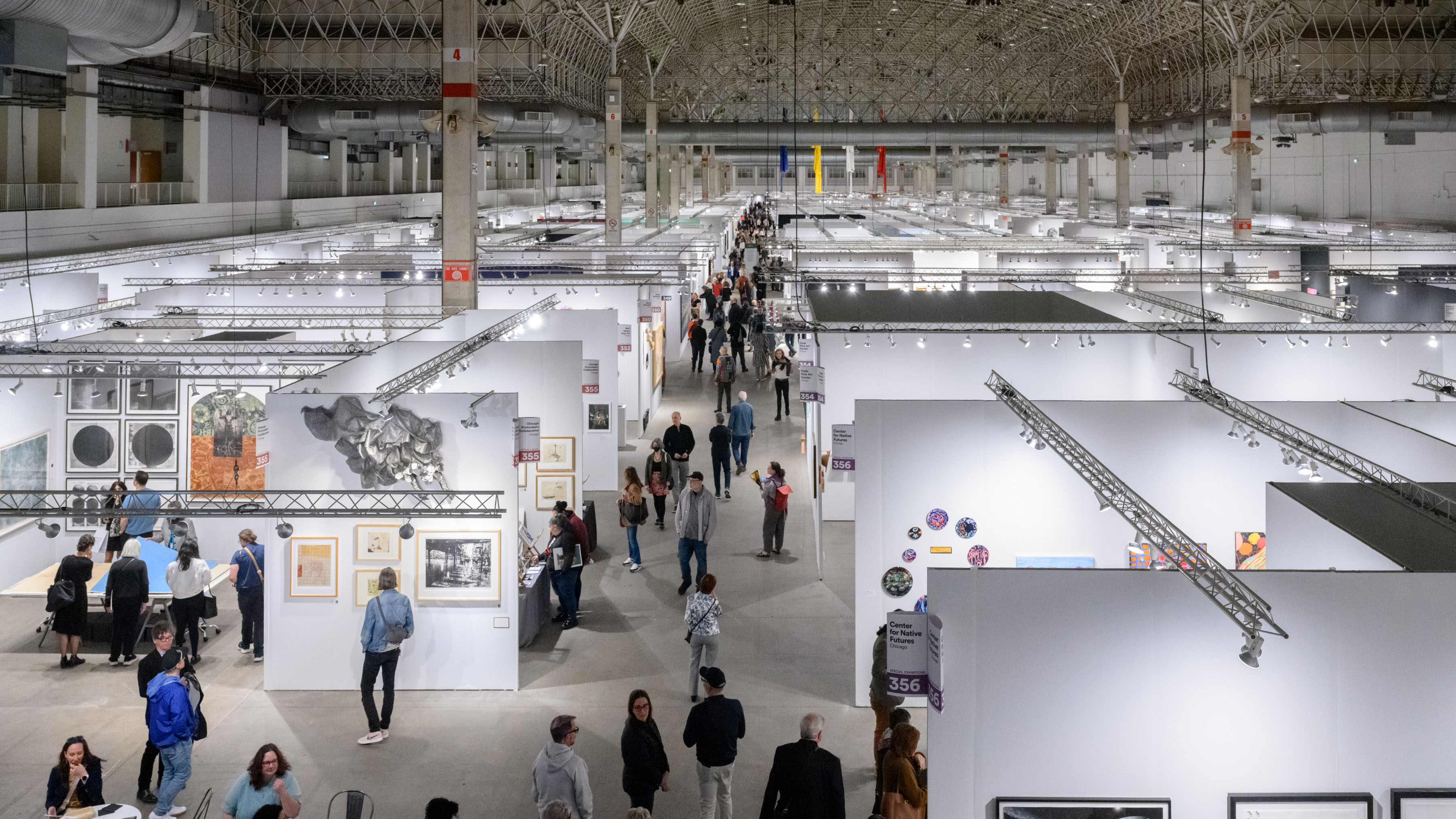
The received wisdom about gallery weeks is that they exist for collectors and tolerate everyone else, and the people who run them have spent a decade insisting otherwise in press releases while changing nothing about the experience. Chicago Exhibition Week, which ran September 14th through 20th in its fourth edition, has actually changed something: it stretched from a long weekend to seven days, on the stated grounds that a weekend is only navigable by people who already know where to go.
Seventy-five spaces participated. Forty-four of them were galleries. One cannot open forty-four galleries simultaneously without conceding that nobody will see most of them, which is the arithmetic problem the extra four days were meant to solve and did not.
The week is produced by Gertie, the contemporary art platform founded by Abby Pucker, which timed this edition to the opening of its own permanent headquarters at 400 North Peoria — a year-round exhibition space and the week's administrative centre. An organisation that programmes the city's gallery week and then opens a gallery during it has arranged a conflict of interest so openly that it stops being one.
What Was Actually On The Walls
Oil on linen. Tea-stained canvas. Soft sculpture in quilted textile. Carved wood. Photographic prints at a scale that required two people to hang.
At DOCUMENT, Slovakian painter Alexandra Barth showed The Awnings, a solo of flat, depopulated architectural surfaces — the kind of painting that rewards the second look and punishes the photograph. Corbett vs. Dempsey gave over its rooms to the late Pope.L, with the focus on his experimental band rather than the performance work, which is the correct and least obvious choice. GRAY hung a monumental freestanding wood relief by Jaume Plensa. Magic Hour opened for the first time, with Natalie Baxter's quilted octagonal textile pieces against bare white.
The week's most useful artefact was not an exhibition. Several participants published their own routes — one writer put out a three-slide itinerary of the galleries she intended to reach and in what order — which is the admission that the official map is unusable and the audience has started doing the curatorial work itself.
Who Went Where
The visitors I watched moved in groups of three and four, which is not how collectors move, and they photographed the rooms rather than the works — the wide shot of a gallery with people in it, not the painting on the wall. At the Plensa the stops were long and silent. At the Baxter textiles almost everyone touched the wall label and then left. The people on the self-made routes finished four spaces in a day and said so cheerfully, as though four were the number.
Seventy-five spaces across seven days is not a programme. It is a permission slip.
Cover image: Fulton Market, West Loop / Wikimedia Commons