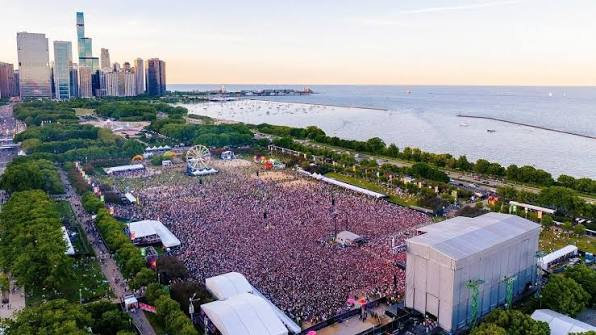
Sueños turned five over Memorial Day weekend, two days of reggaetón, Latin trap and urbano on the Grant Park lakefront with the skyline doing work no stage designer can afford. Organizers framed 2026 as a milestone edition, which is what every festival says at five. This time the claim holds.
The bill ran through J Balvin, Kali Uchis and Fuerza Regida, three acts that between them cover most of the arguments currently happening inside Latin music. Balvin is the crossover architect whose era the genre has largely moved past. Uchis has spent a career refusing to be filed anywhere. Fuerza Regida represent the regional Mexican surge that has been the actual commercial story of the past three years, and which American festival programmers were slow to book.
From Upstart to Anchor
Five years ago a two-day Latin festival on the lakefront was a bet. Chicago has one of the largest Mexican and Puerto Rican populations in the country and had no downtown festival built for it, which reads now as an obvious gap and did not read that way to anyone selling tickets in 2021.
What Sueños has become is the front end of the Chicago calendar — the event that claims Memorial Day weekend and with it the unofficial start of summer. That position used to belong to whichever street fest opened first. The season now starts when these gates do.
Three Claims on One Audience
It is worth setting Sueños against the other two large Latin events on the calendar, because 2026 made the contrast unavoidable. Fiesta del Sol in Pilsen is free, 54 years old, protest-born, and funds scholarships through Pilsen Neighbors Community Council. El Grito in September is a civic event with the city’s hand on it, and it spent the summer dealing with a boycott and with federal immigration enforcement. Sueños is a ticketed commercial festival with international headliners on public parkland downtown.
Those are three different theories of what a Latin music event in Chicago is for: a neighborhood institution, a civic ceremony, and a destination festival. Sueños is the only one of the three that had an uncomplicated summer, and the reason is worth saying out loud — a lakefront festival selling tickets to a regional audience was not the kind of gathering people were frightened to attend this year.
A note for anyone researching next year: the festival’s own site currently displays May 29–30, 2027. That is next year. The 2026 edition was May 23–24, and the official recap covers it. Several listings aggregators have already gotten this wrong.
Five years in, the skyline still does most of the heavy lifting behind that stage. The difference is that the festival no longer needs it to.
Cover image: Via enjoyillinois.com