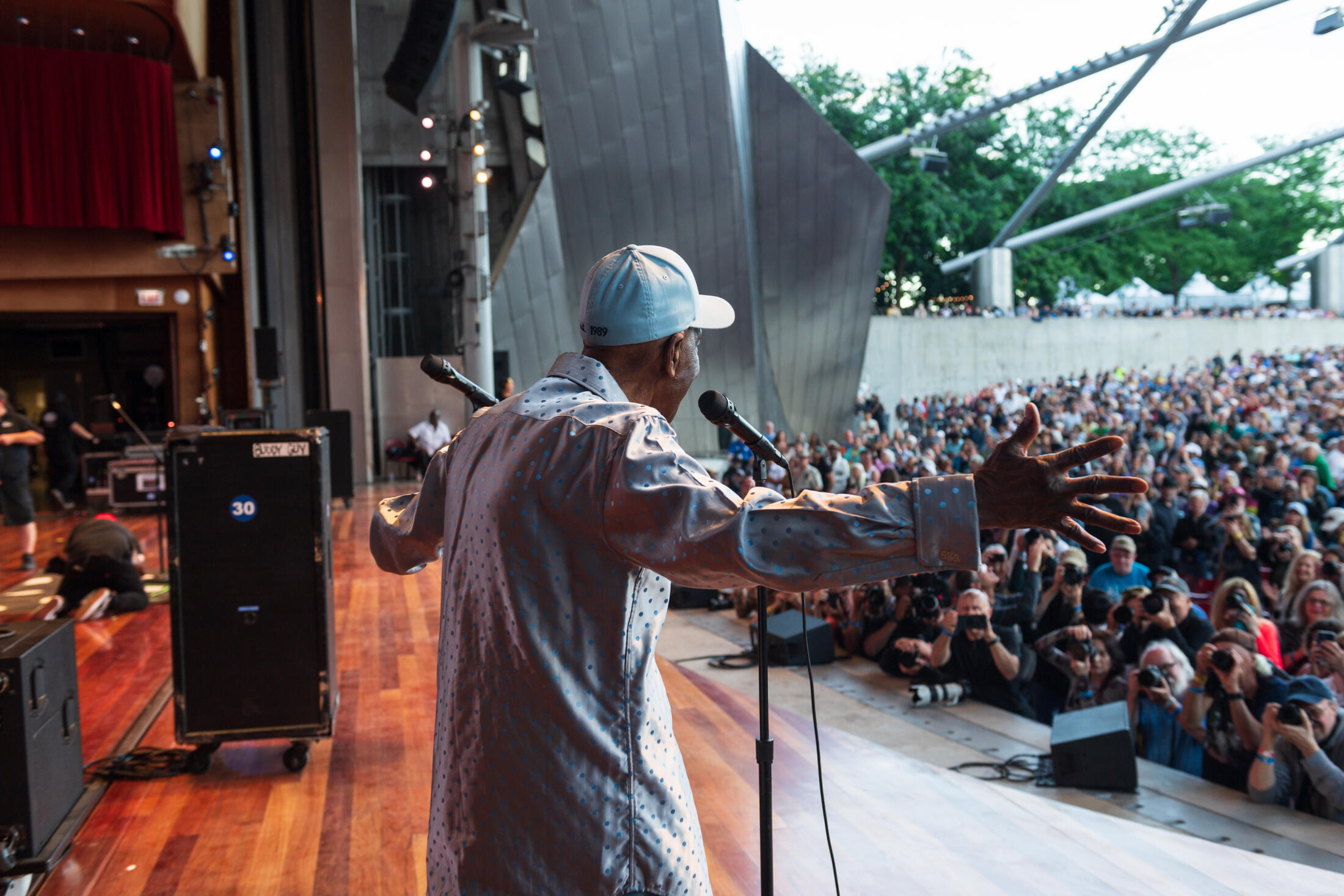
The Chicago Blues Festival ran June 4 through 7, free, billed as the largest blues festival in the world. The lineup carried Mavis Staples and Christone “Kingfish” Ingram, along with a B.B. King tribute programme. The structural decision, though, was geographic: opening night happened at the Ramova Theatre at 3520 South Halsted in Bridgeport, with the remaining three days at Millennium Park.
Moving night one of the city’s flagship blues event out of the Loop and into a restored neighbourhood theatre is the most interesting thing the city did with a festival all summer.
Why the Ramova Is the Right Room
The blues did not come out of a bandshell. It came out of rooms — South and West Side clubs, small and loud, where the music worked because the ceiling was low and the audience was close enough to interrupt. Millennium Park is a superb place to put an orchestra and a peculiar place to put a blues band, because the format is a lawn and the relationship between player and crowd is the same as at a fireworks display.
A restored theatre on Halsted is a room. It has walls, a balcony and an acoustic. Opening the festival in one is an admission that the free downtown model, for all its reach, has been slightly wrong about this music for years.
It also puts the festival back on the South Side, where it belongs by lineage if not by budget. The Ramova’s restoration is its own Chicago story — a shuttered neighbourhood movie palace brought back after decades dark — and using it for night one ties the festival to a piece of physical recovery rather than to a park.
Staples and Kingfish, at Opposite Ends
The bill made the generational argument explicitly. Mavis Staples is a living Chicago institution whose career runs from the Staple Singers through the civil rights movement to the present, and putting her on a free stage downtown is the city paying a debt it can never fully settle.
Kingfish is the other end of the same line — a young player whose technical command is the strongest available answer to the recurring claim that the blues is a heritage form with no future. Book both and the festival is making a case about succession rather than curating a museum.
The B.B. King tribute is the part to be slightly wary of. Tribute programming is how festivals fill space when they are unsure of the present tense, and a festival that books Kingfish does not need it.
Full lineup and schedule went out through the schedule and Choose Chicago.
Four days, no admission, Mavis Staples on a downtown stage, and the whole thing starting in a Bridgeport theatre that was dark for years. The city got that sequence right.
Cover image: Courtesy Choose Chicago